
VIN and variant review
Confirm model year, Urus variant, market specification and relevant vehicle details.
Lamborghini · Urus · Exterior Parts
A complete vehicle-specific exterior conversion combining a replacement front bumper and splitter, vented hood, side and wheel-arch extensions, rear bumper and diffuser, upper spoilers, mirror covers and coordinated detail pieces.
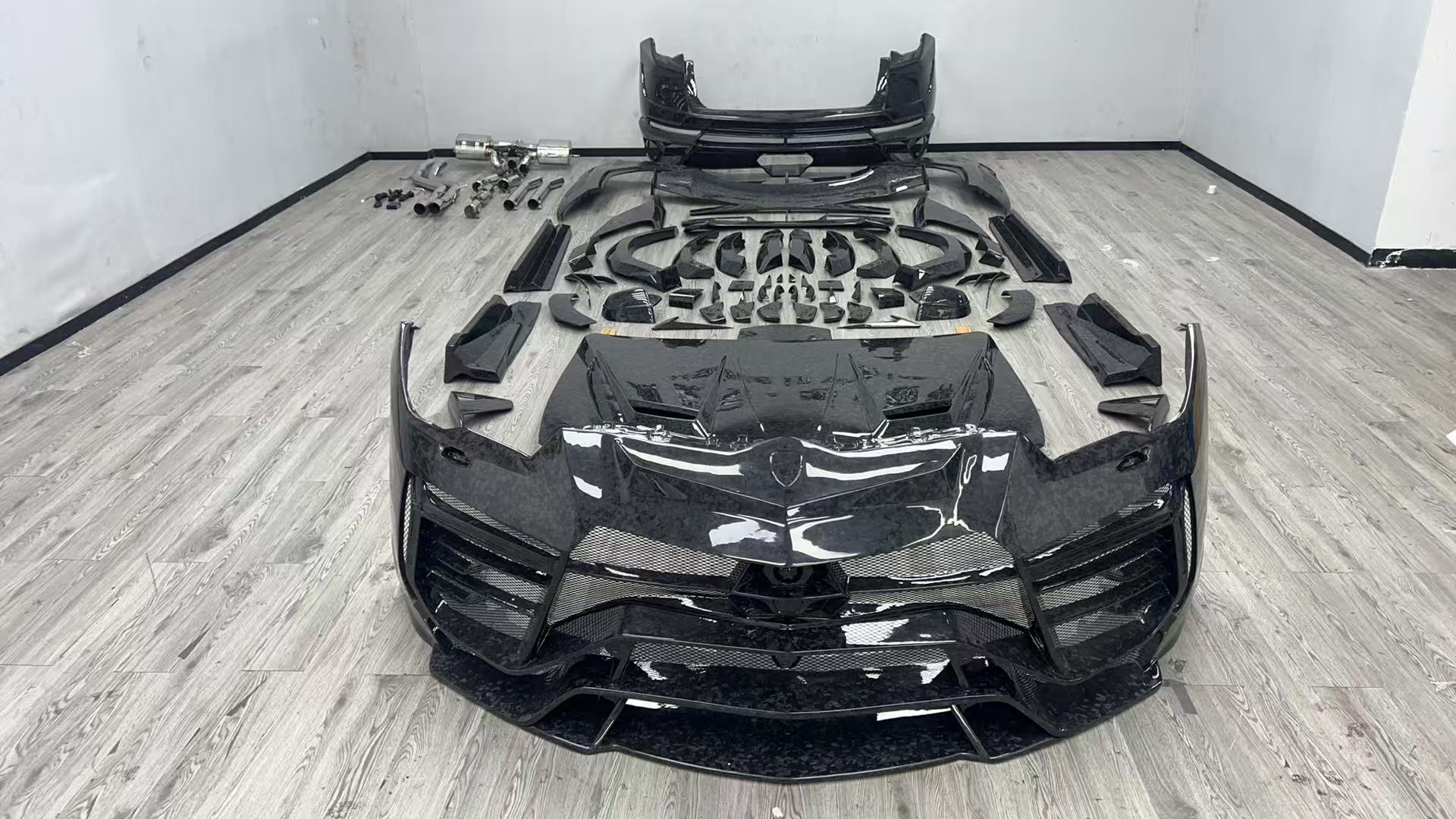
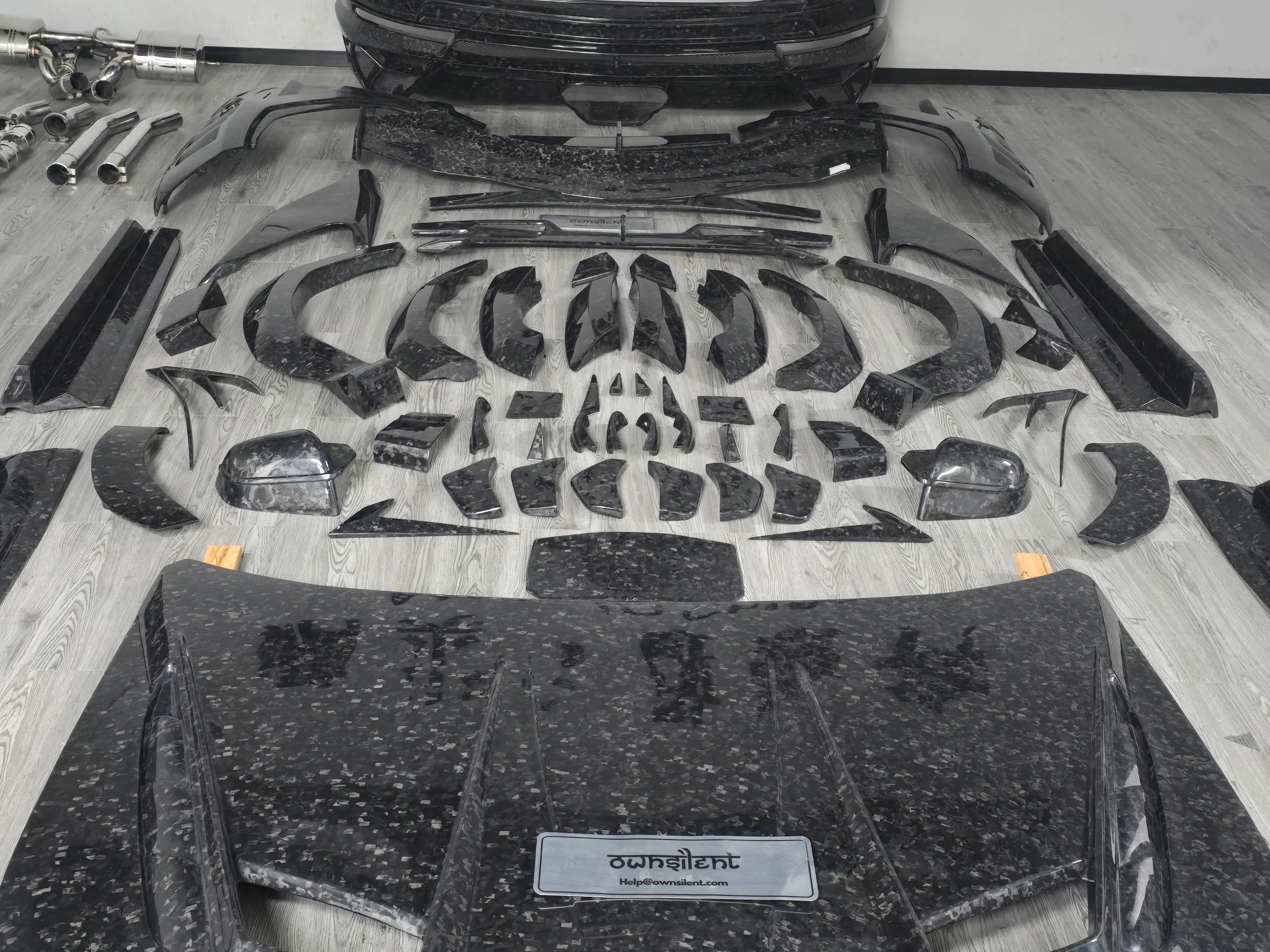
The complete layout brings the major front, rear, hood, side, arch and upper-aero pieces together before installation.
Confirm model year, Urus variant, market specification and relevant vehicle details.
Record every included panel, trim, finish and mounting item in the quotation.
Review finish, component count and visible condition before protective packing.
Choose air or sea cargo after production, QC and destination planning.
Project overview
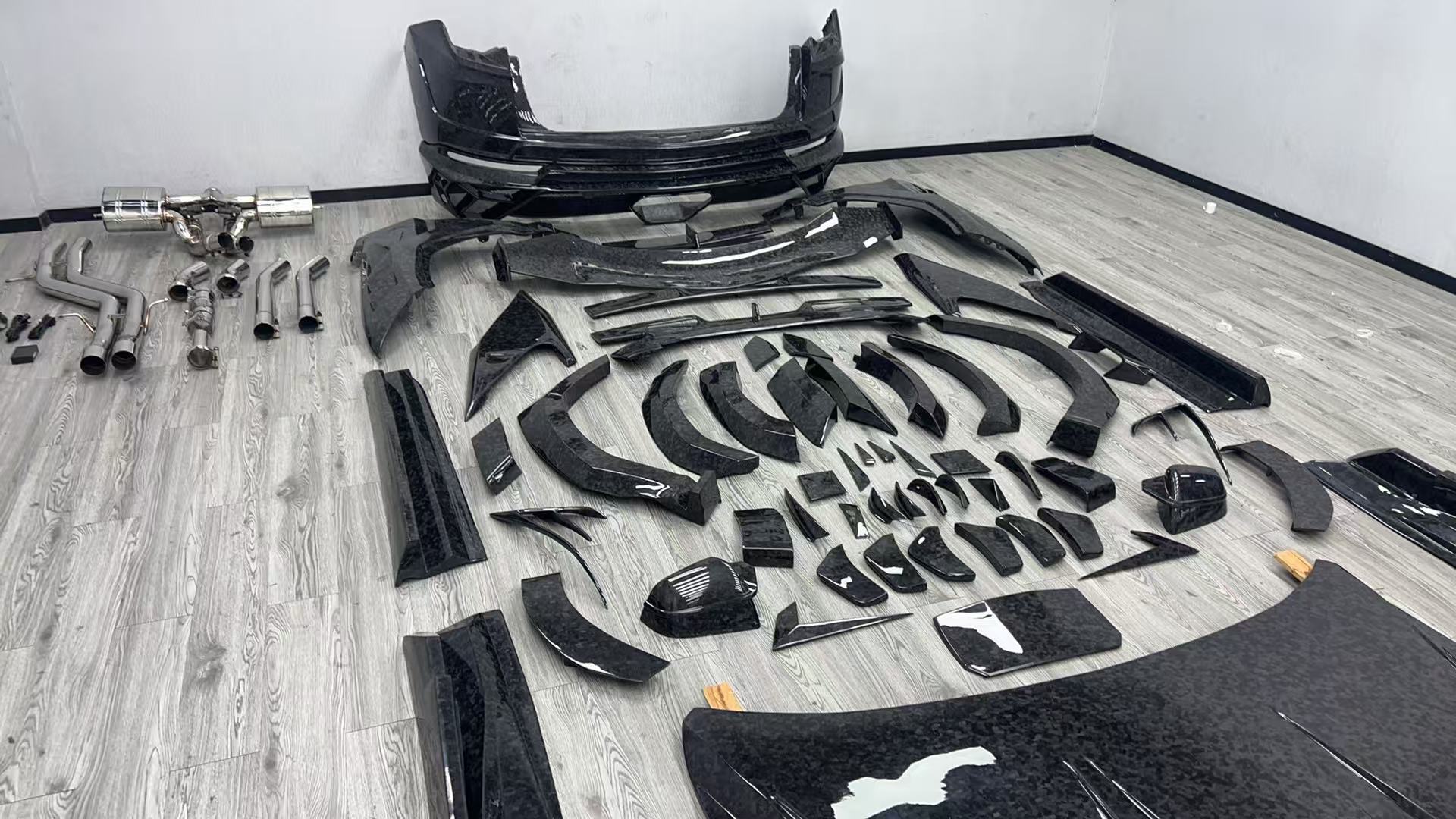
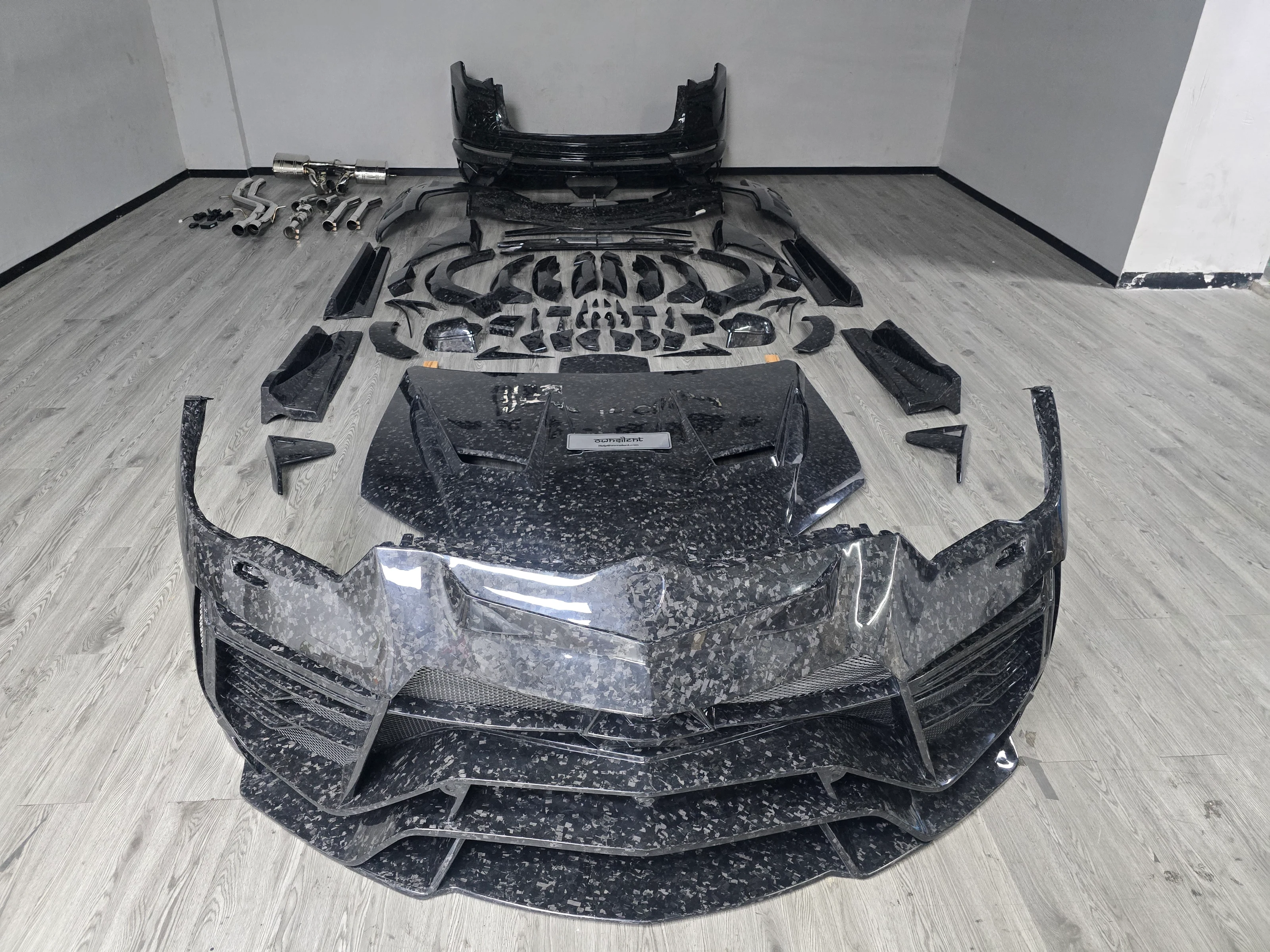
The supplied project images document the component package arranged before fitment. This makes the page useful for identifying major assemblies, comparing finish across separate pieces and checking the relationship between front, side, arch, rear and upper-aero areas.
The visible material direction uses a random chopped-carbon appearance under a gloss clear finish. Construction method, substrate, reinforcement, coating system and any requested change to gloss, satin or matte must be confirmed in the official order rather than assumed from appearance.
This package is presented before installation and does not claim a completed-vehicle result. Compatibility remains vehicle-specific, and professional trial fitment is required before fastening, surface finishing or related exhaust work.
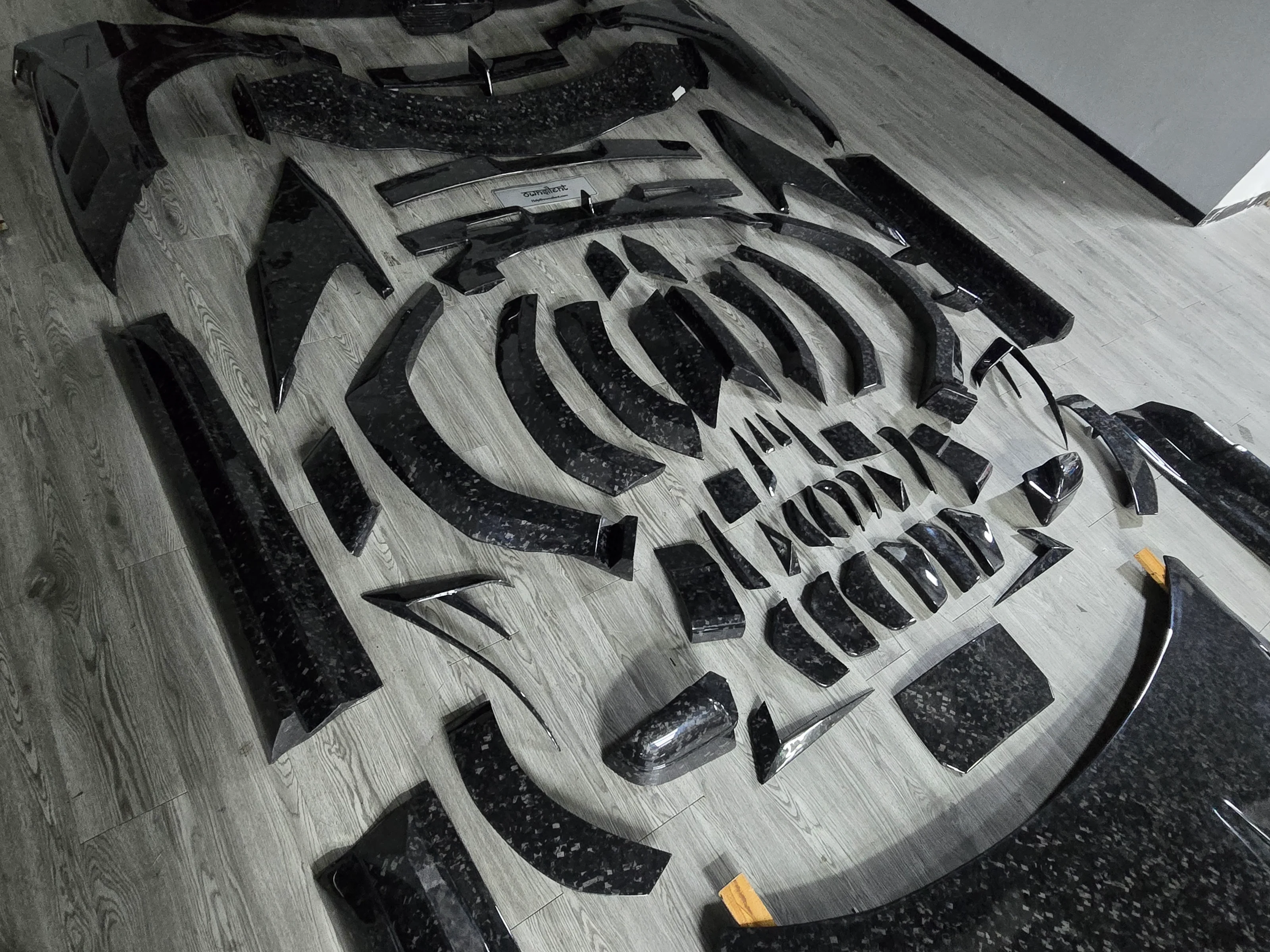
Detailed component breakdown
Each section uses one strong reference image beside focused product information. This keeps the page fast, balanced and readable without leaving large empty spaces.
01 · Front conversion
The front assembly is the strongest visual change in the package. It replaces the factory lower architecture with larger openings, sharper outer edges and a deeper splitter treatment.
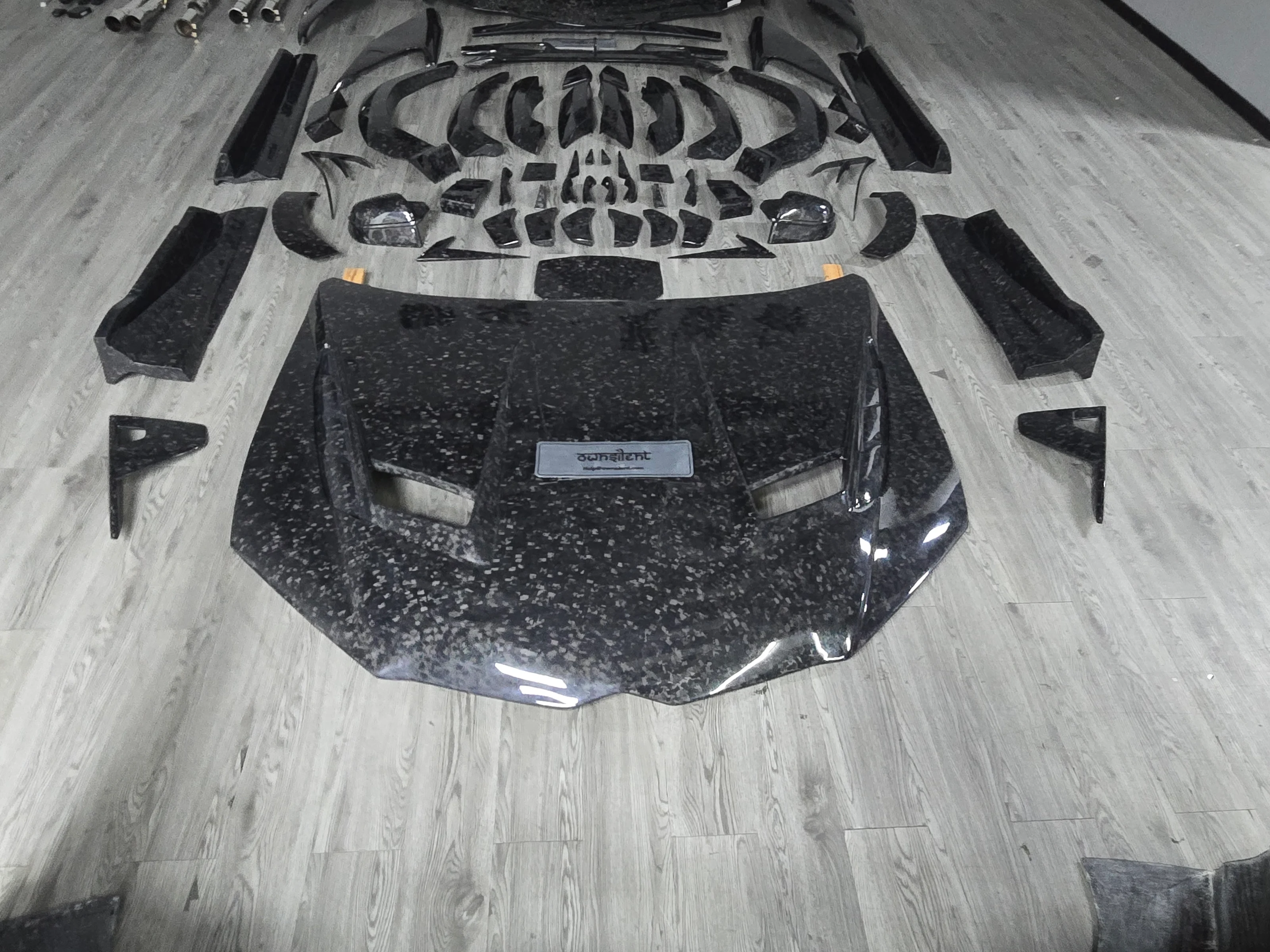
02 · Central body panel
The hood carries the forged-carbon pattern across one uninterrupted panel while multiple vents introduce depth and a more technical appearance.
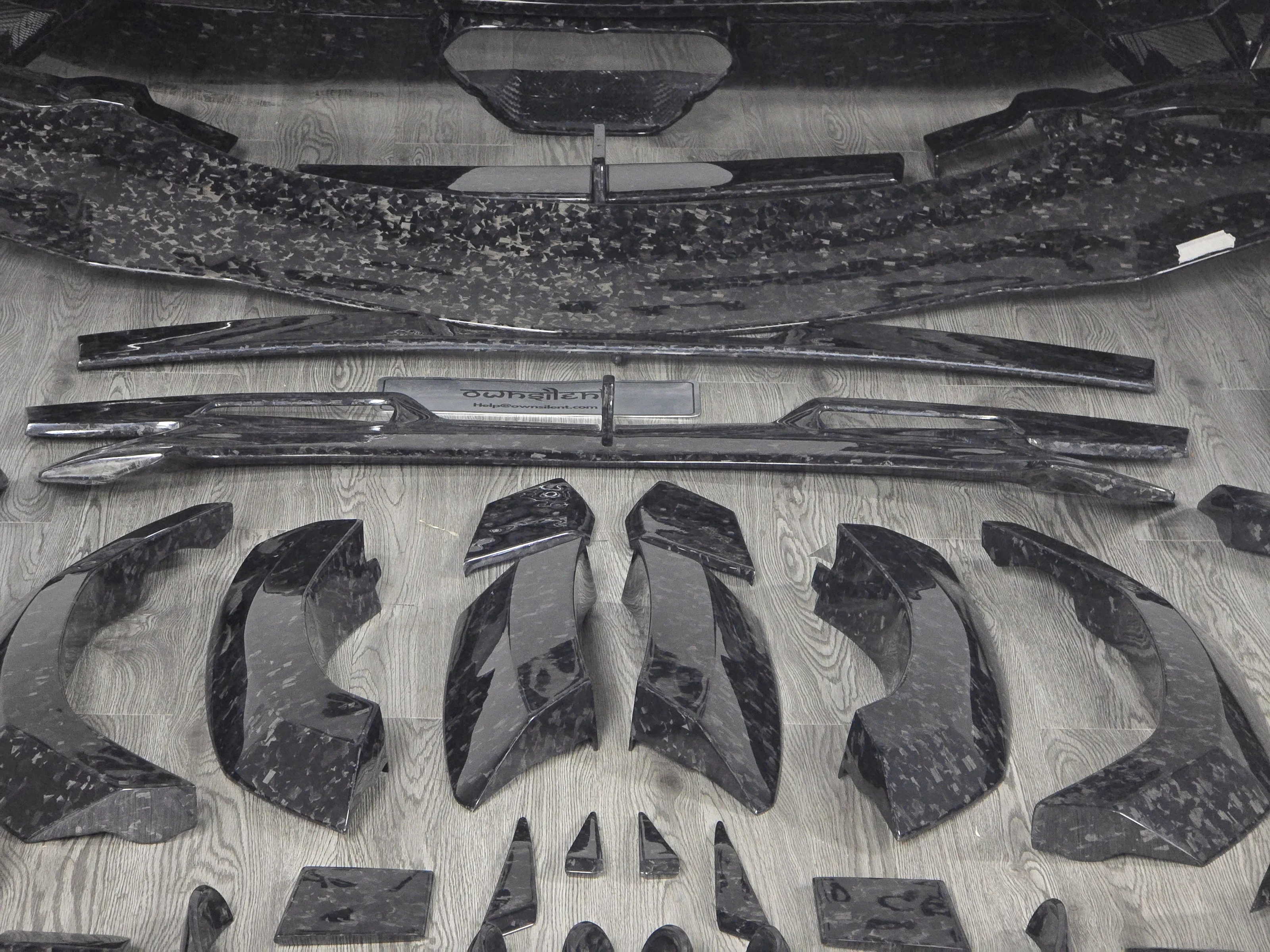
03 · Body profile
Long side extensions and shaped arch pieces build a continuous widened profile. Their alignment must be considered as a connected system rather than as isolated trims.
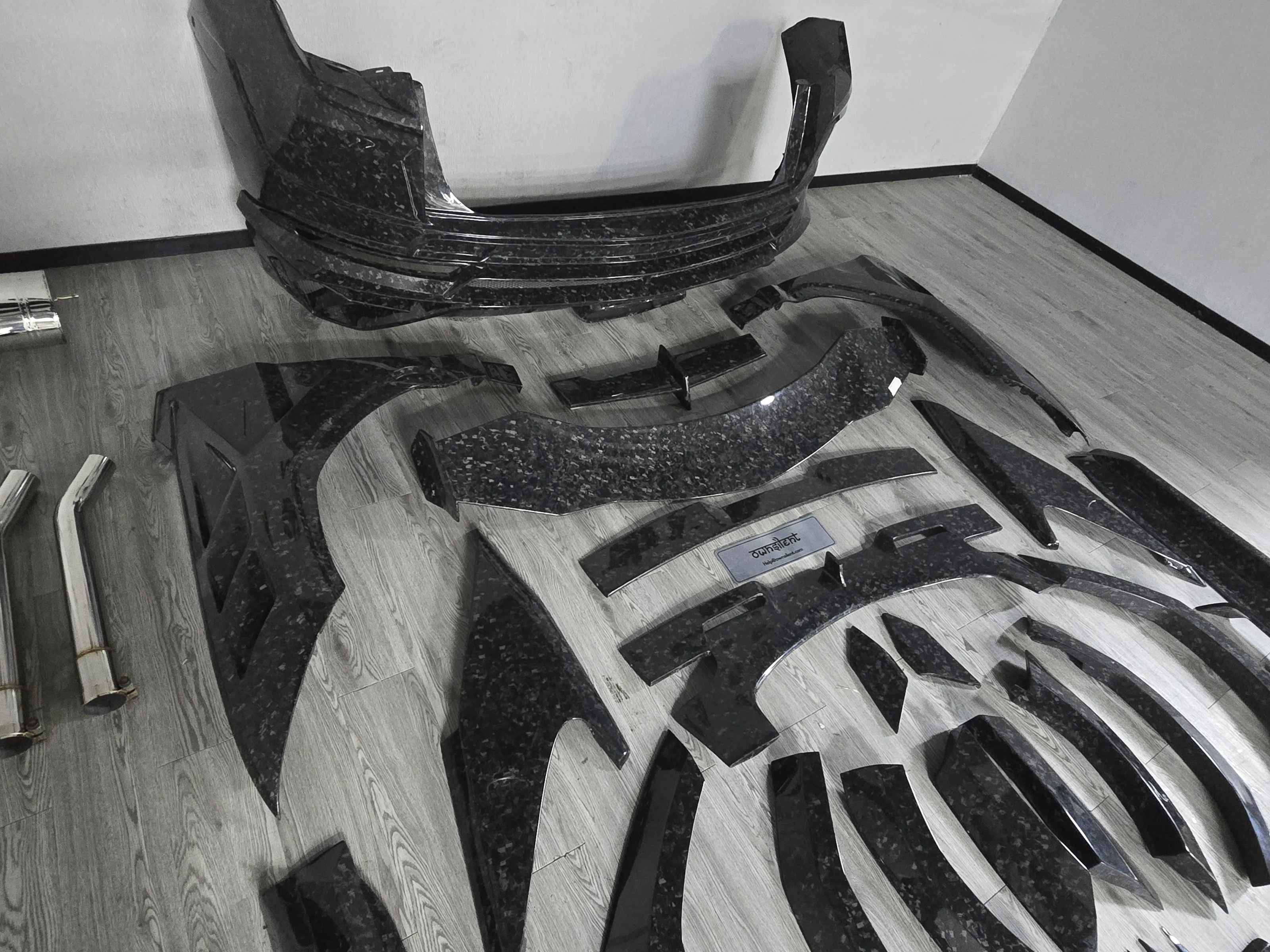
04 · Rear conversion
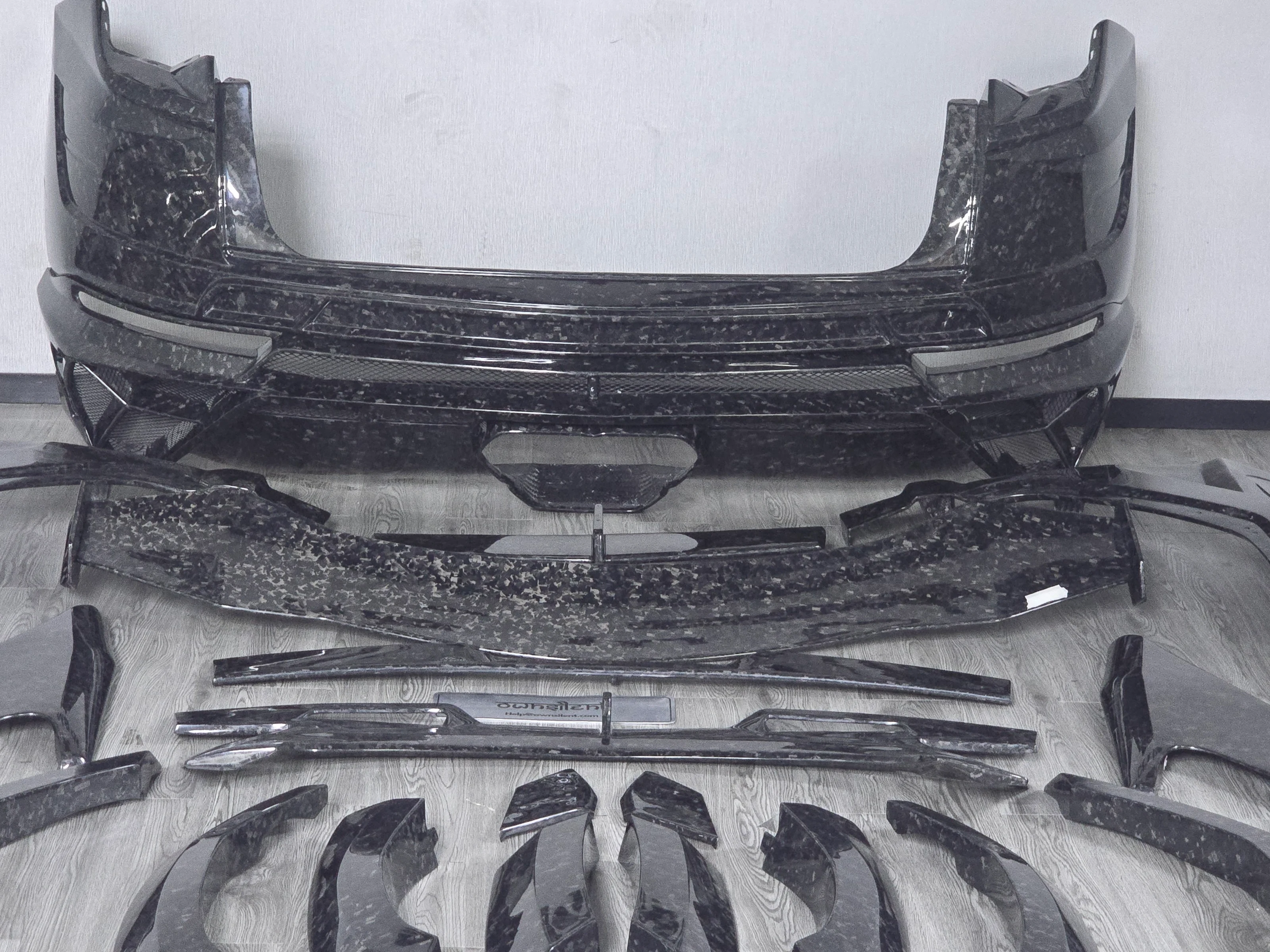
The rear package combines a replacement fascia with layered lower surfaces. Exhaust outlet positioning and the relationship with upper aero pieces must be reviewed together.

05 · Upper aero
The spoiler components extend the design above the waistline and help the rear conversion read as one coordinated package.
06 · Finishing details
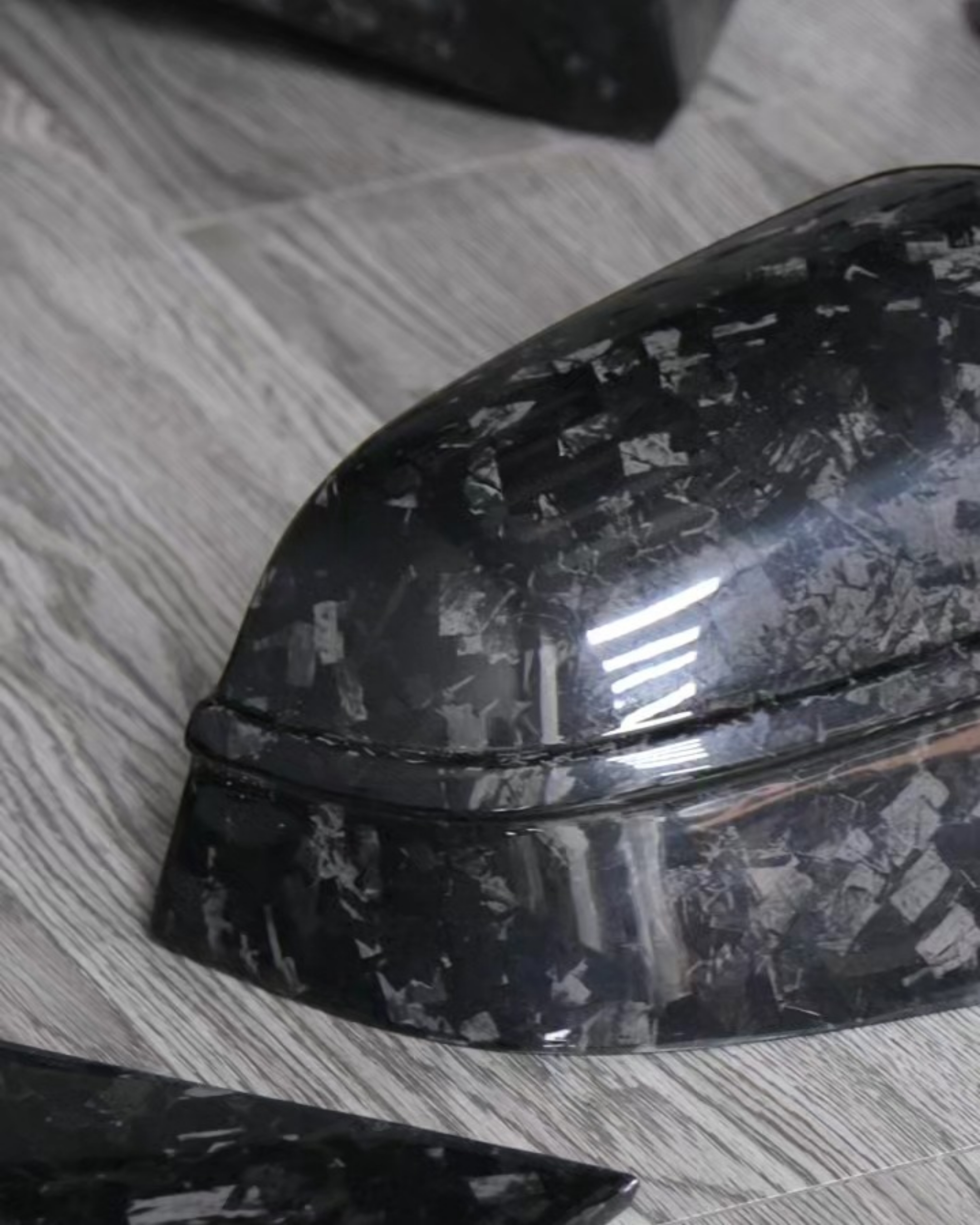
Mirror covers, smaller trim pieces and exhaust sections complete the conversion and are listed separately for precise scope control.
Exact product scope
This is not a single decorative trim. It is a coordinated exterior programme containing large replacement panels, lower aerodynamic surfaces, widening elements and smaller finishing pieces. The final quotation must identify every supplied component separately.
01
The principal front-end transformation combines the largest replacement panels with smaller intake and edge pieces that must be aligned as one assembly.
02
Curved arch pieces and long lower extensions create the widened side profile and connect the front and rear design language.
03
The rear conversion is built from lower, central and upper elements planned together around the tailgate, exhaust outlets and surrounding factory functions.
04
Smaller visible components complete the material continuity. Exhaust items are controlled separately because the exact included hardware can vary by quotation.
Component control: only parts named in the final written quotation and packing list are included. The confirmed written quotation and packing list control the included component scope.
Forged-carbon manufacturing
Forged carbon uses chopped carbon-fibre material arranged inside shaped tooling rather than a continuous visible woven cloth. Pressure, resin control, curing, trimming and surface finishing create the random marbled appearance seen across this Urus package. The exact factory process and construction for an order must still be confirmed in its technical specification.
The original vehicle surfaces, neighbouring panels, fixing points and required clearances are measured. Digital modelling defines the new bumper, hood, arch, skirt, spoiler or trim geometry.
A master component or digital tool path is used to create rigid production moulds. Mould accuracy influences panel shape, edge definition and left-right consistency.
Chopped carbon-fibre charge material and the specified resin system are weighed and prepared for the required panel area, thickness and structural support.
Carbon material is distributed within the mould with additional attention around corners, edges, vents, mounting zones and large cosmetic surfaces.
Matched tooling compresses the material while temperature, pressure and cure time consolidate the panel. Process control limits voids and stabilizes the final shape.
The cured part is removed, inspected and trimmed to its finished outline. Vent openings, mounting holes and joining surfaces are cut according to the component design.
Related pieces are checked together before sanding, sealing and clear coating. Gloss, satin or matte direction is built through the approved finishing system.
Technicians inspect visible finish, dimensions, edges, mounting areas and component count. Parts receive a final component-count inspection and are separated with protective material for shipment.
Visible character
Because chopped fibres are distributed rather than woven into a repeating cloth, the visible flakes and directional clusters vary naturally from one area to another.
For a coordinated complete kit, pattern density, resin colour, clear finish and acceptable panel-to-panel variation should be reviewed before production.
Complete conversion component set
Wide product views and portrait component details are separated into aligned grids for clear comparison of the conversion scope.
Landscape collection
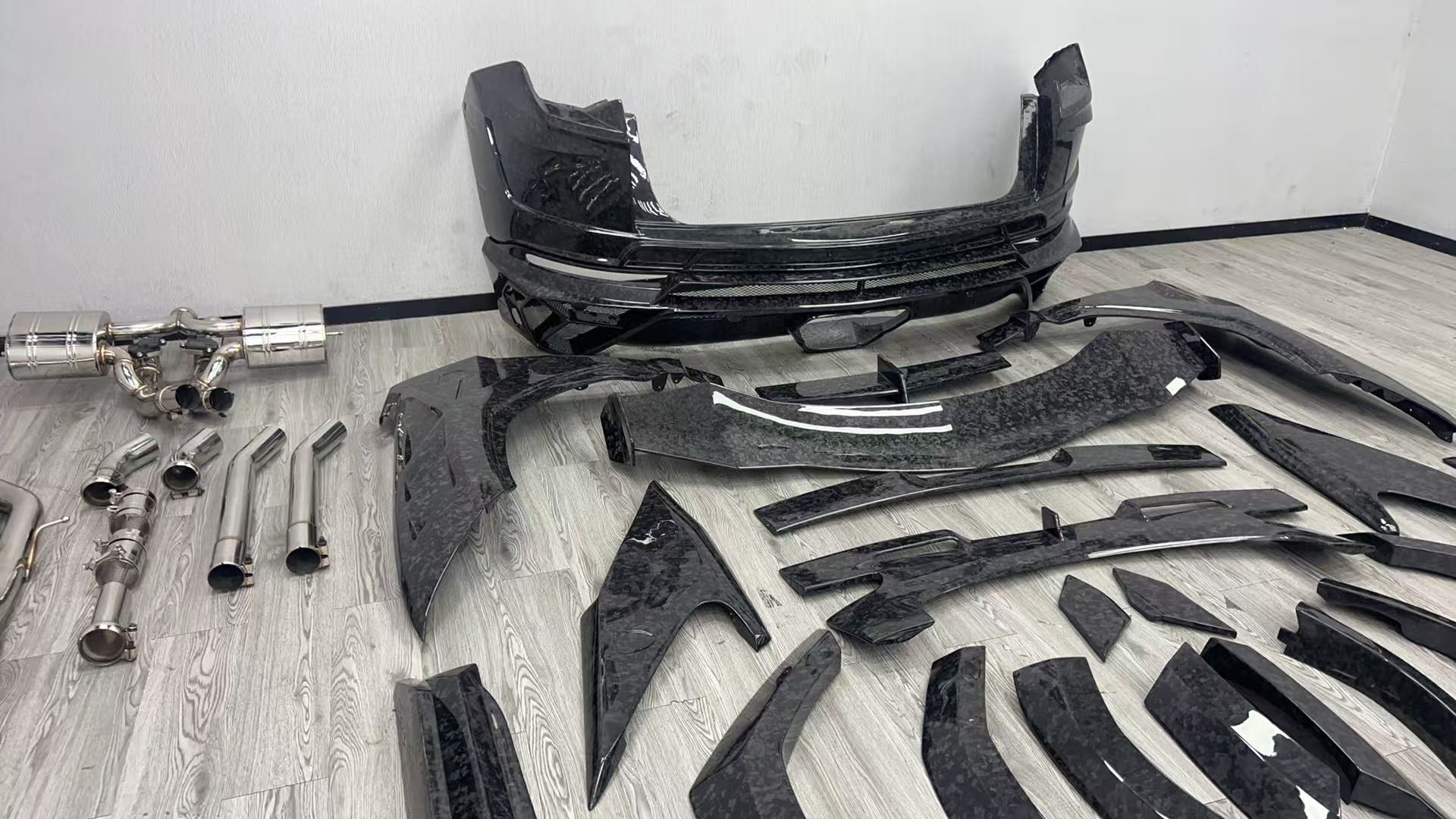
The staged arrangement makes the coordinated design language across the vehicle easier to understand.
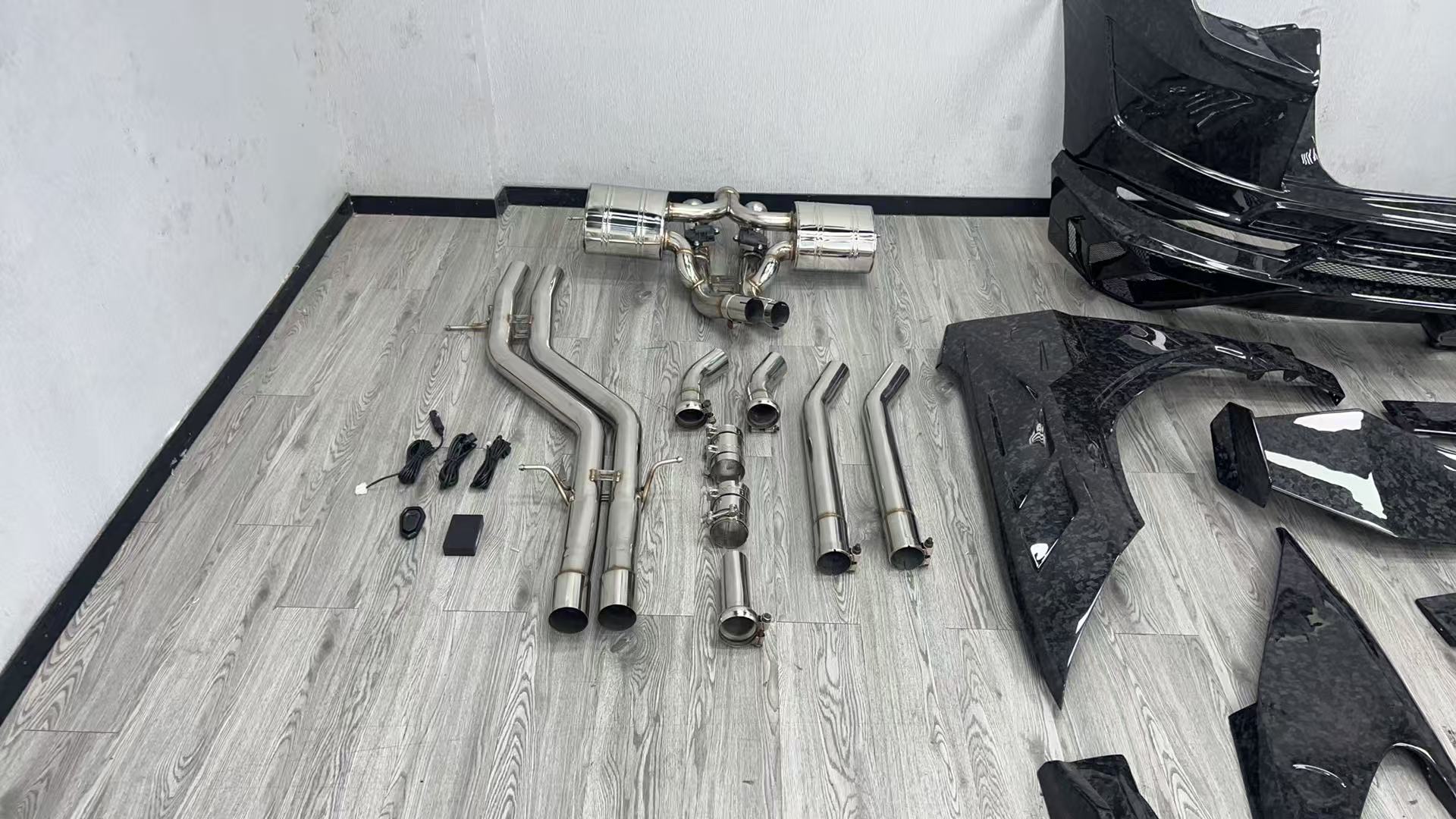
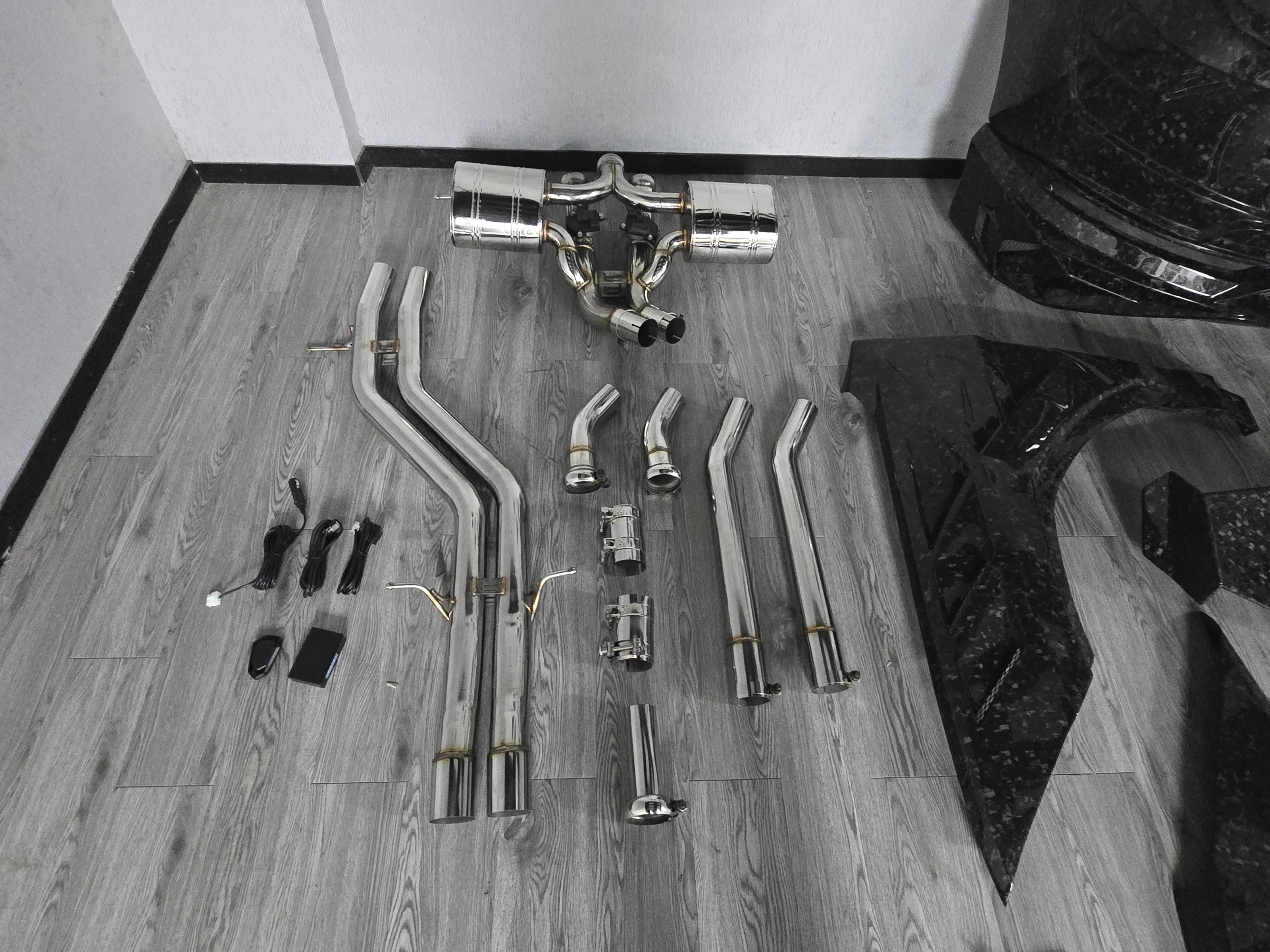
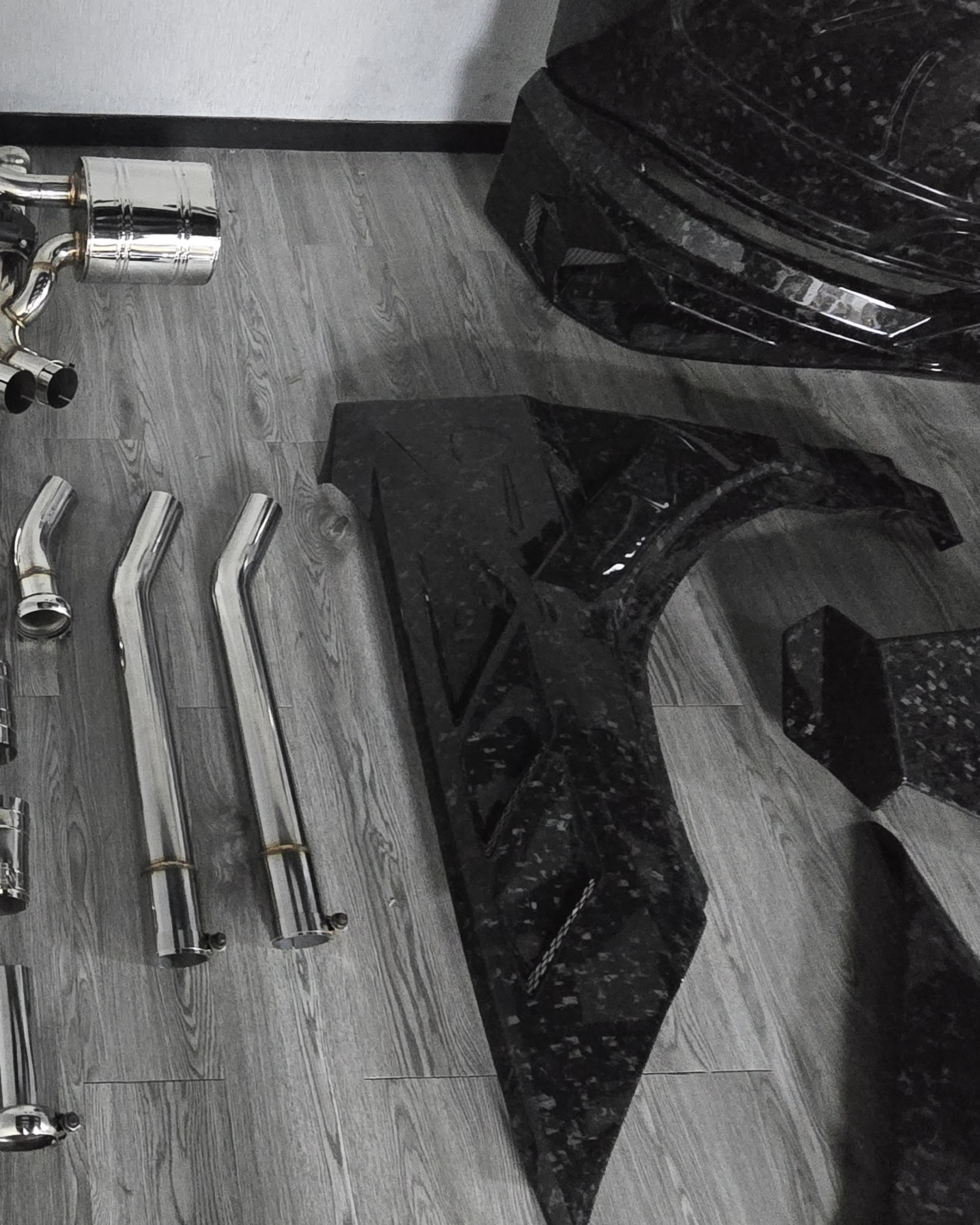
Exhaust sections are visible in the supplied project set; the written quotation controls whether they are included.
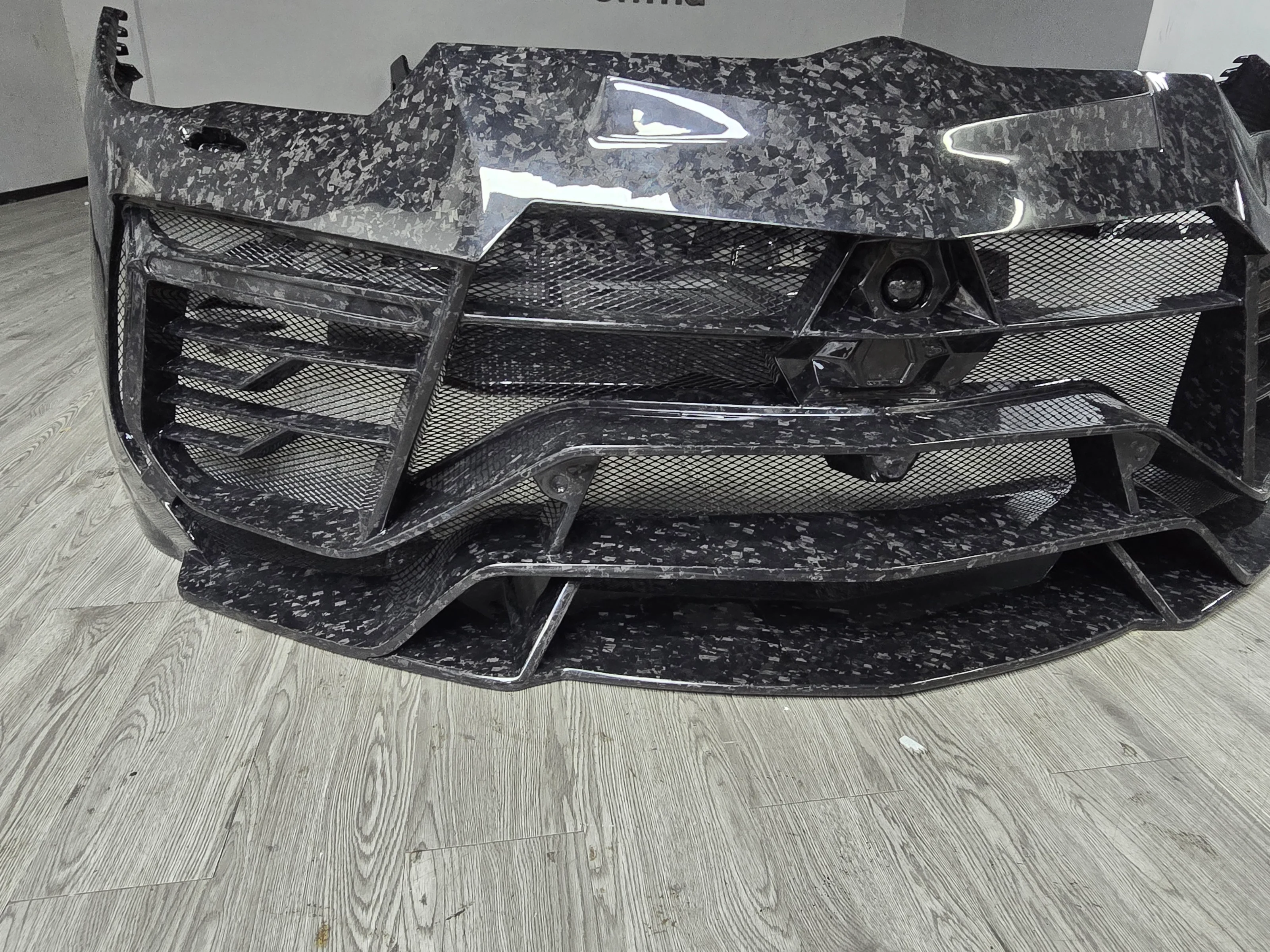
The frontal angle records intake openings, layered lower surfaces and the random carbon pattern.
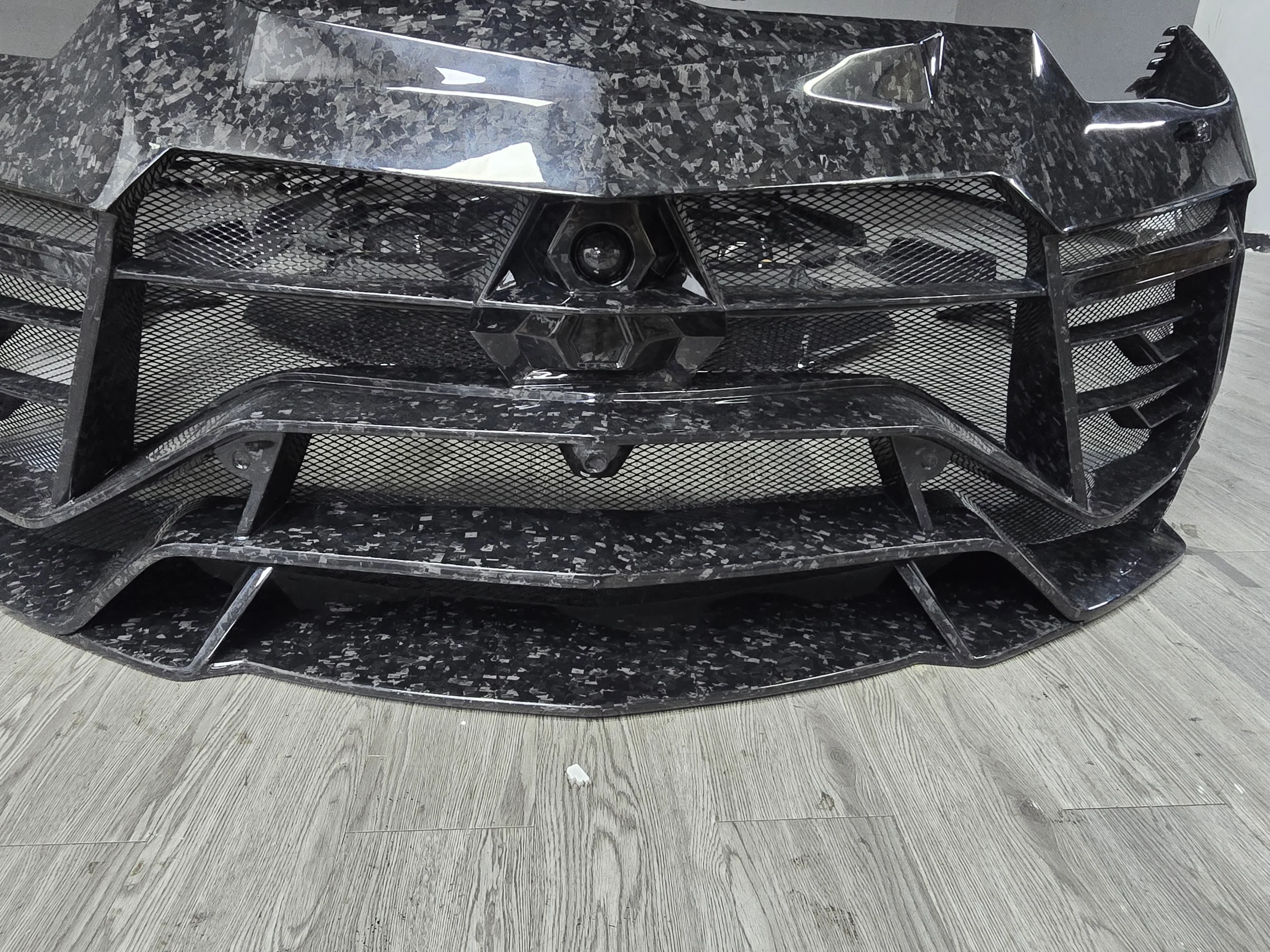
Closer framing shows the edges, openings and transitions that require careful trial alignment.
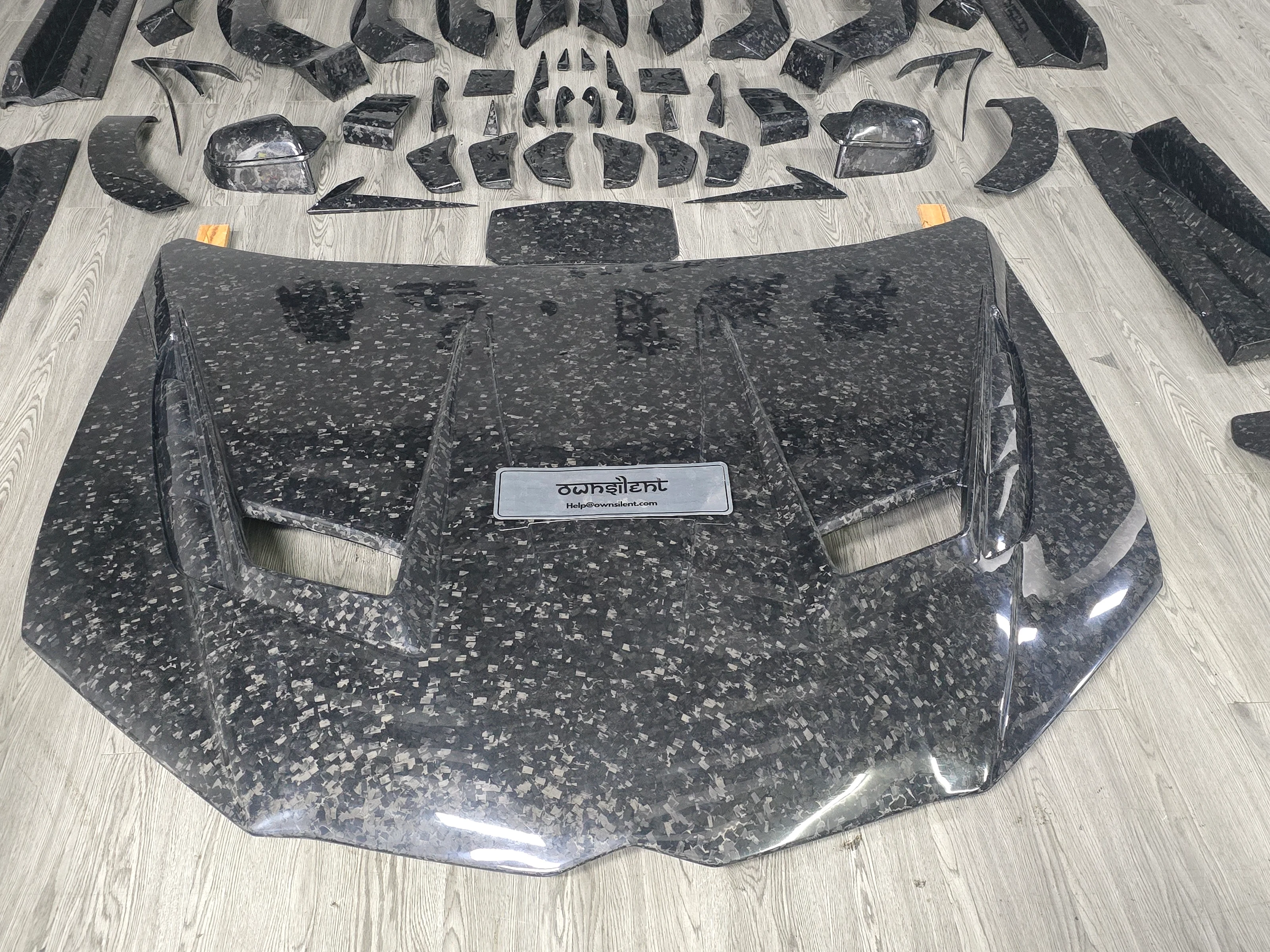
The closer view helps evaluate the visible forged-carbon pattern, vent edges and clear-coated surface.
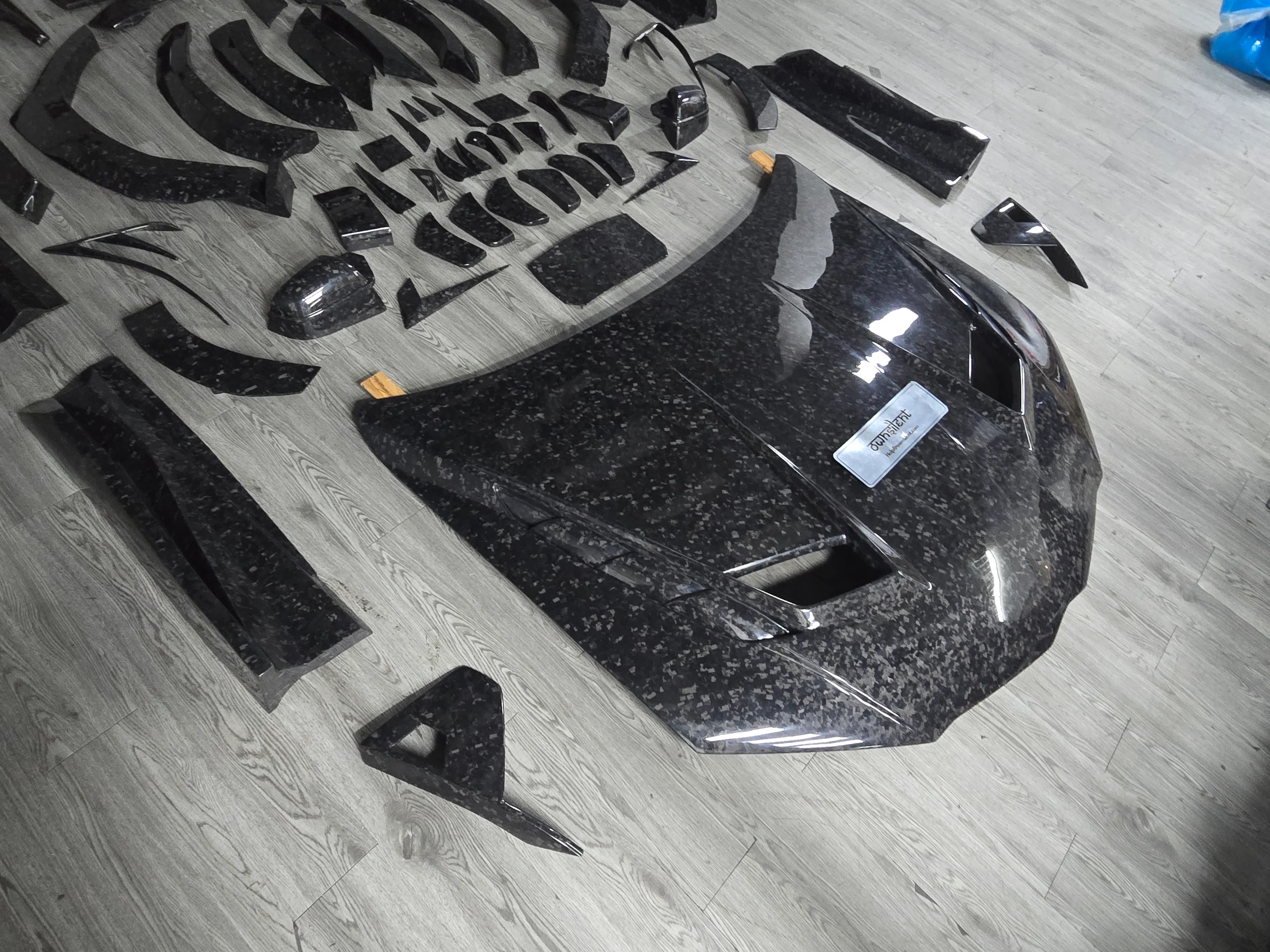
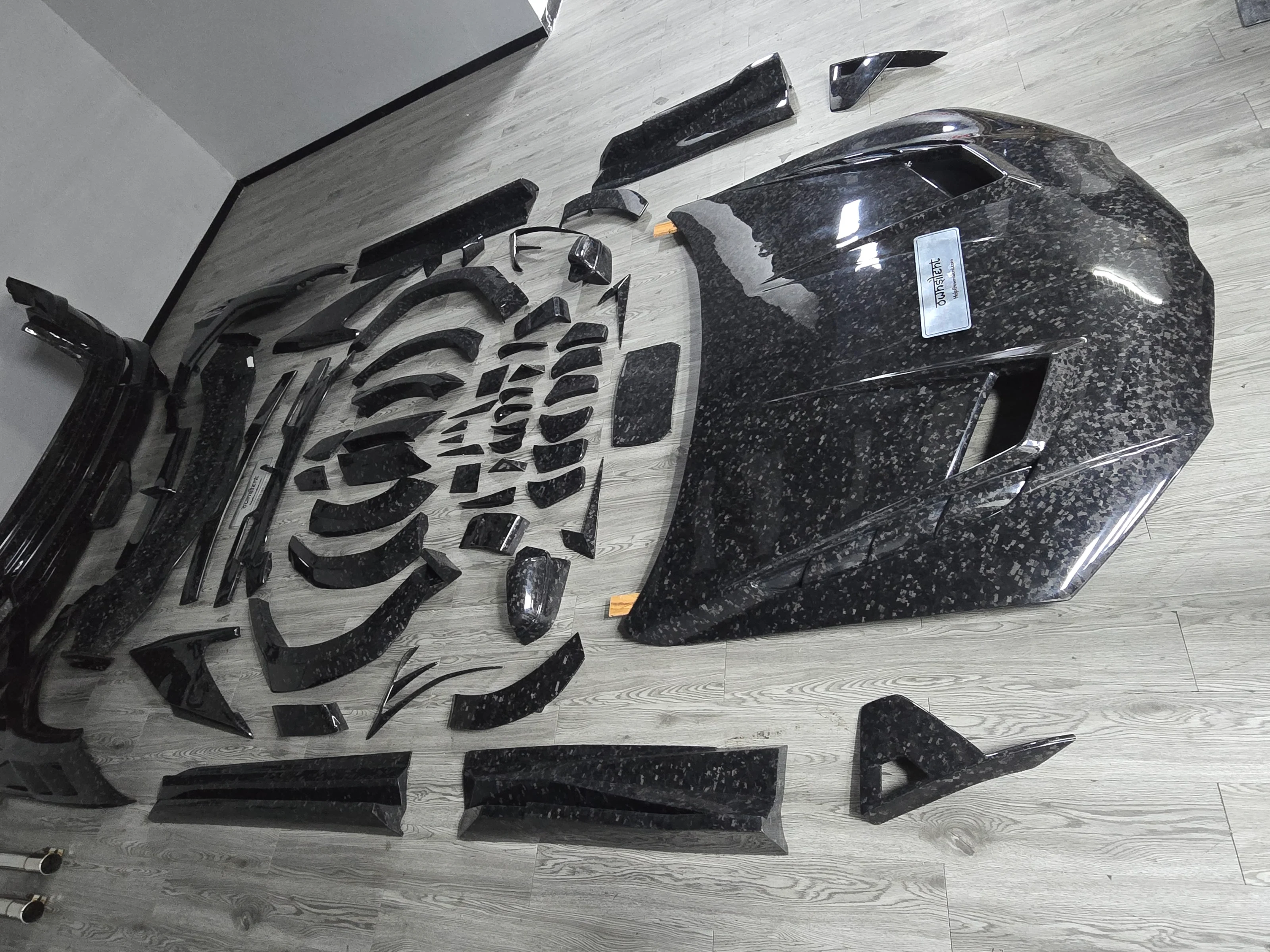
An angled presentation relates the hood to the surrounding smaller pieces within the conversion.
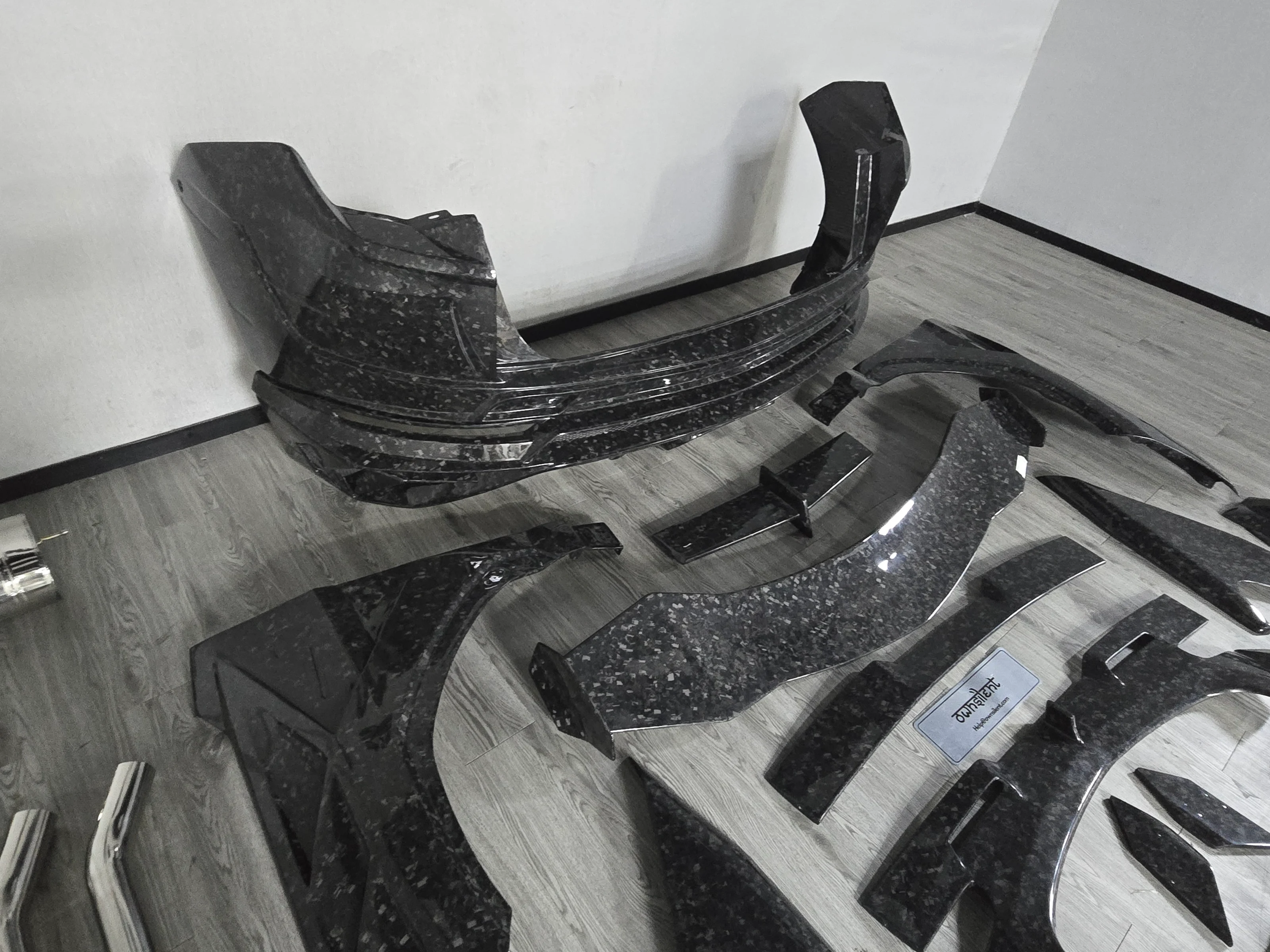
The elevated view records the width, top edges and relationship between the rear components.
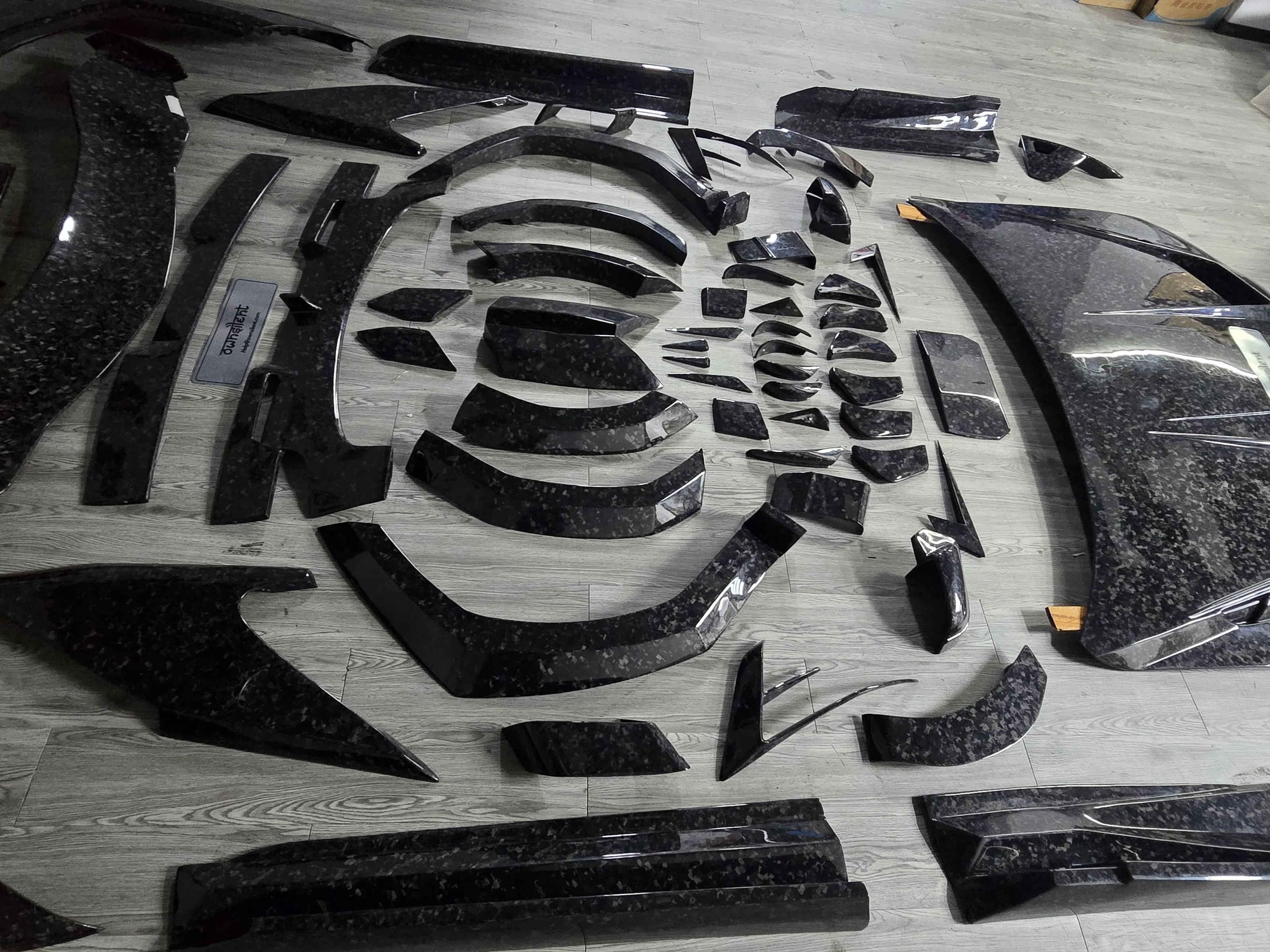
This overview highlights the number of smaller pieces that complete the major body assemblies.
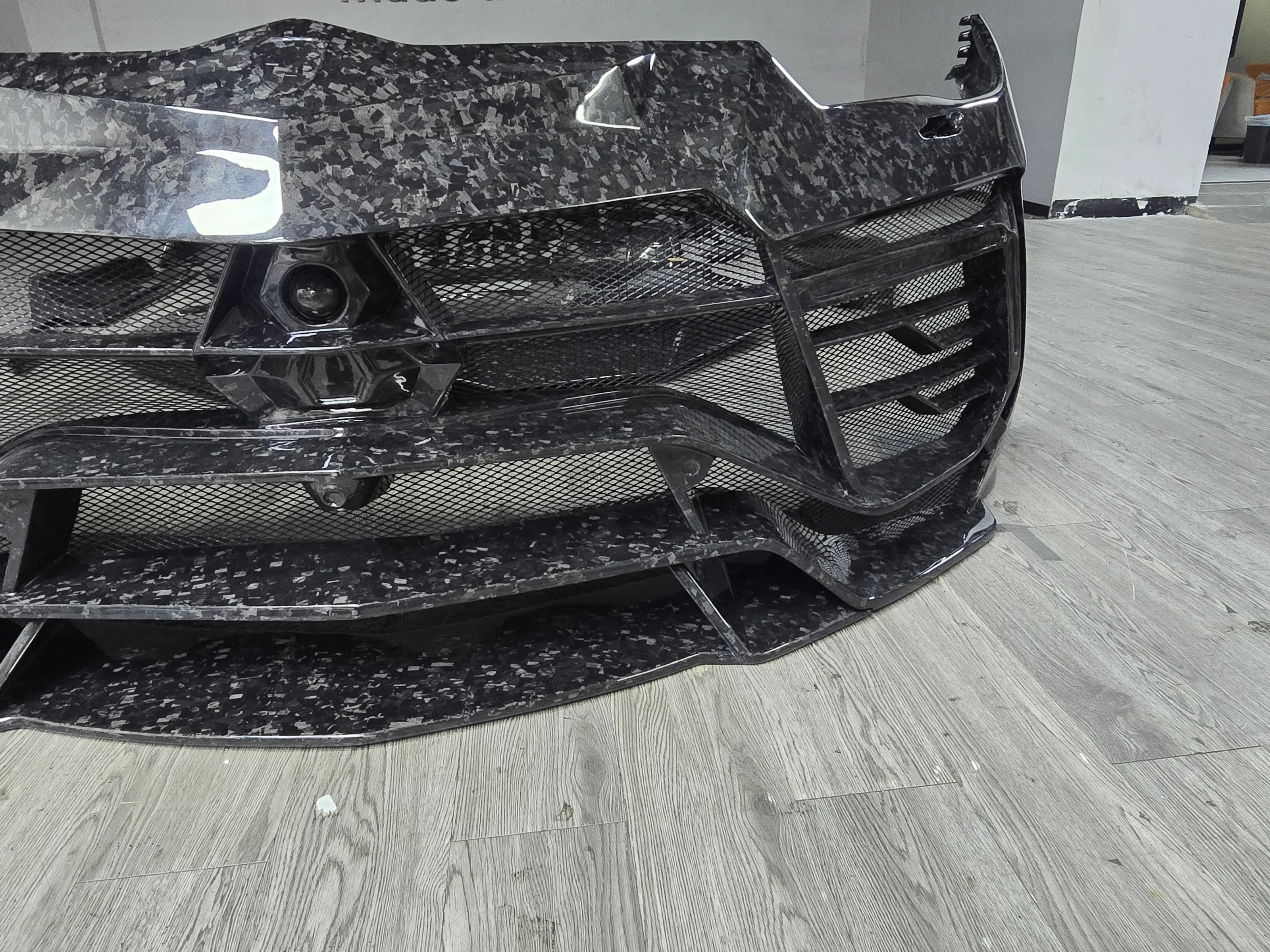
The angle highlights the layered bumper corner, intake edge and lower splitter transition.
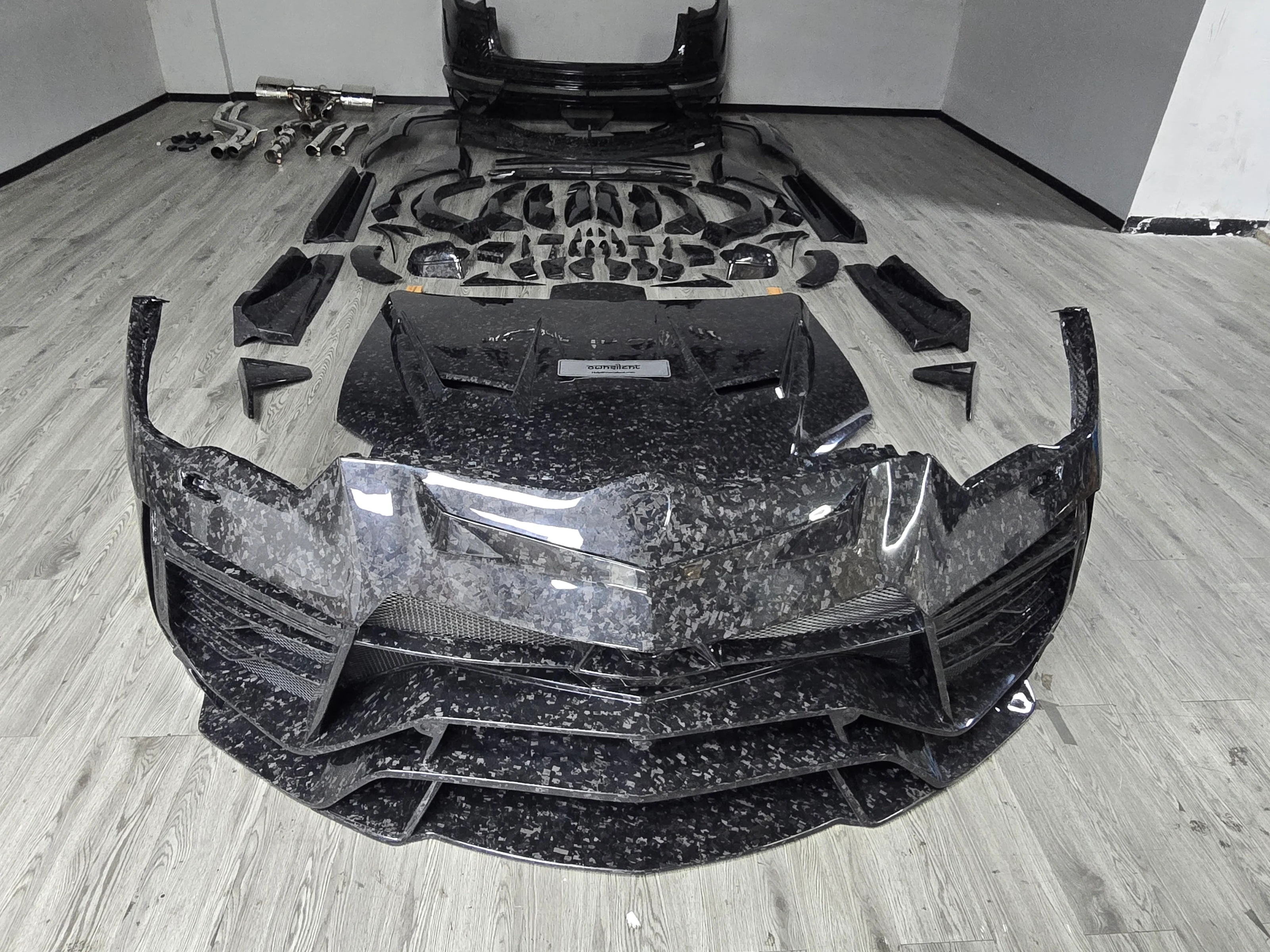
Positioning the two largest front panels together helps assess their visual relationship before fitment.
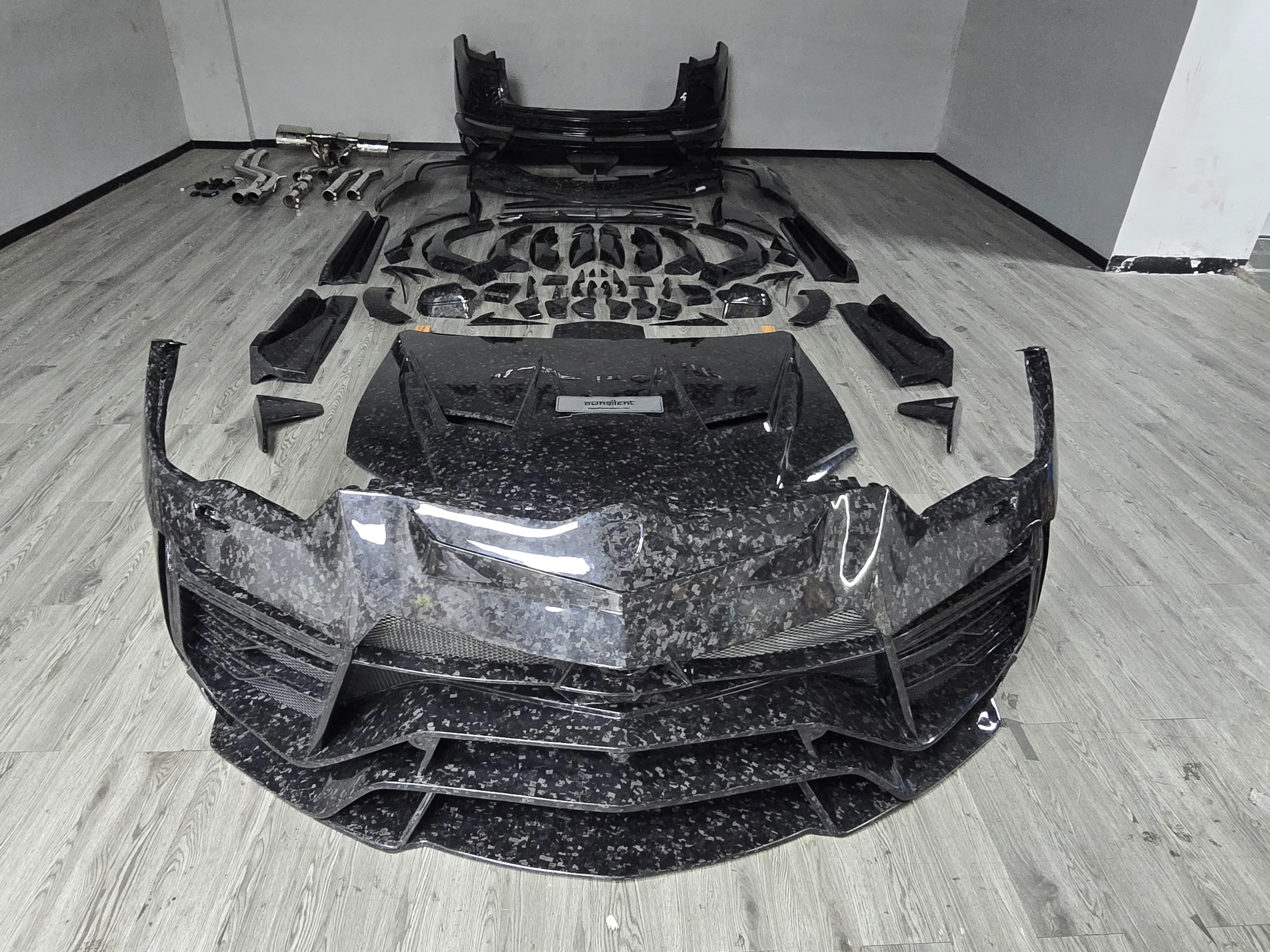
The overview records panel scale, vent placement and coordinated forged-carbon appearance.
The close view reveals vent edges, reflected finish and variation in the chopped-carbon pattern.
Long side pieces and curved arch sections are grouped to support left-right component identification.
The separated components make the shapes, edges and mounting returns easier to inspect.
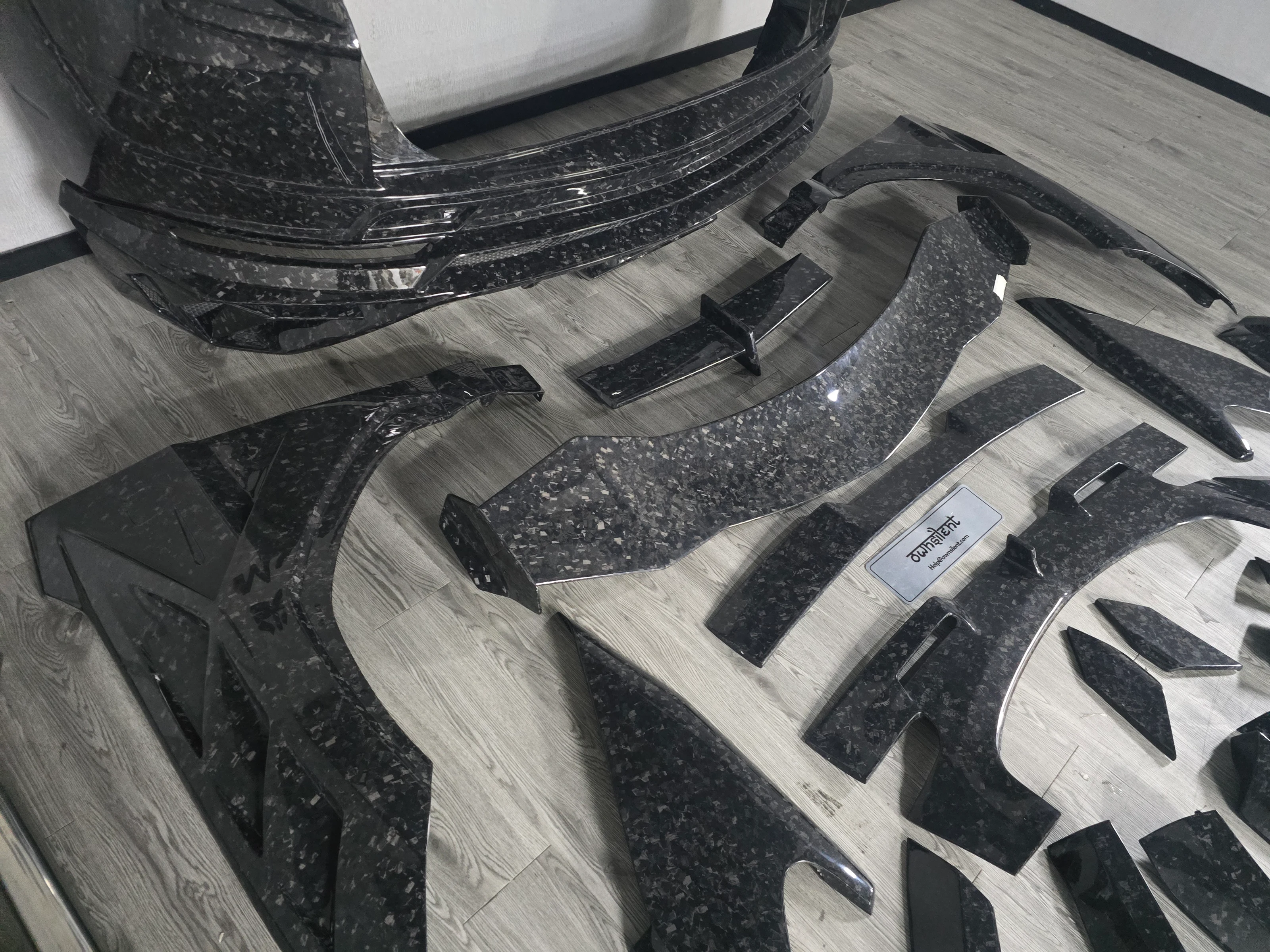
The finish and diffuser geometry can be reviewed before the rear package is prepared for installation.
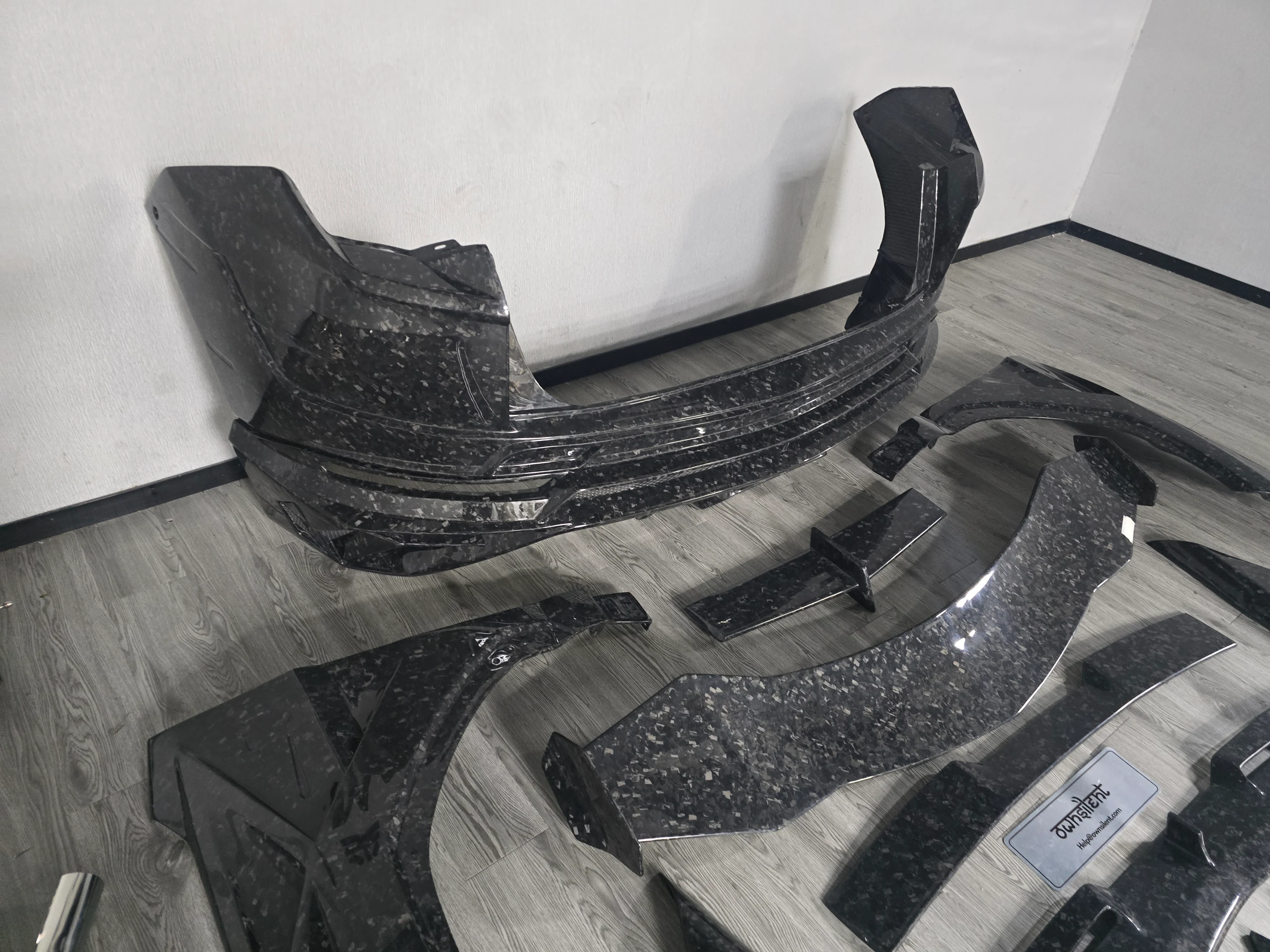
Grouping the rear parts supports component counting and planning around the exhaust outlets.
Portrait collection
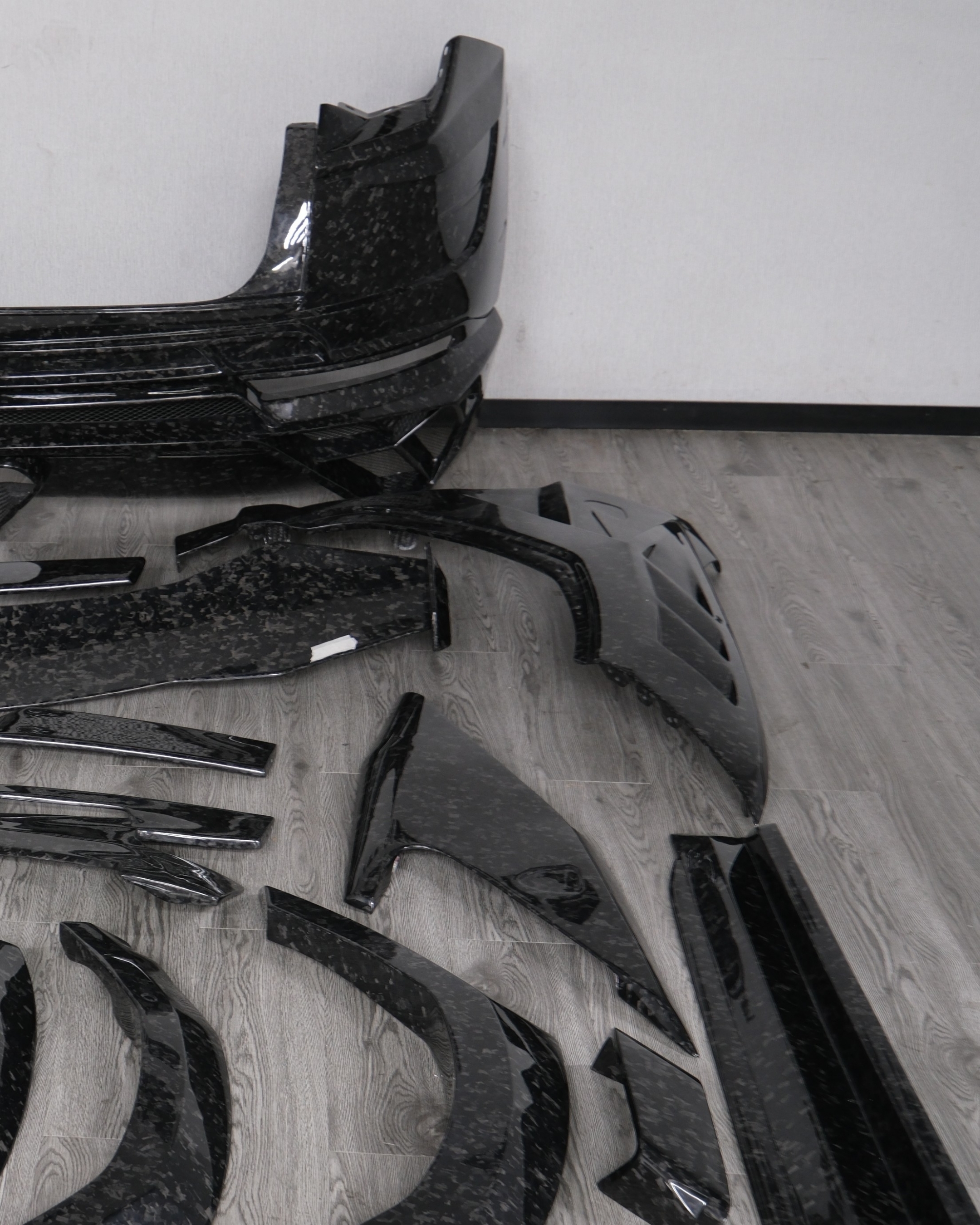
Portrait framing isolates the gloss surface, contours and stacked rear components.
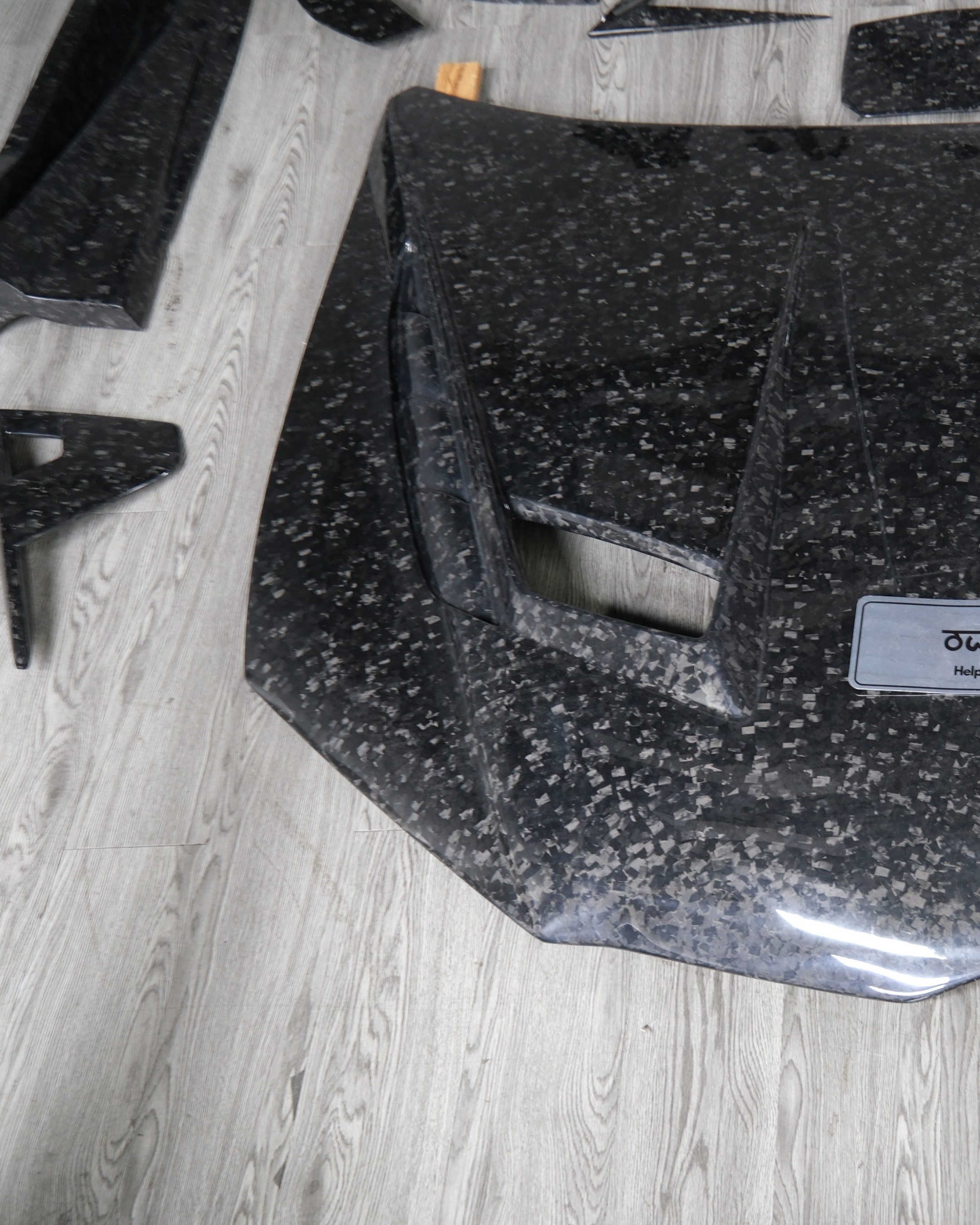
Reflected light makes the random chopped-carbon appearance and clear finish visible.
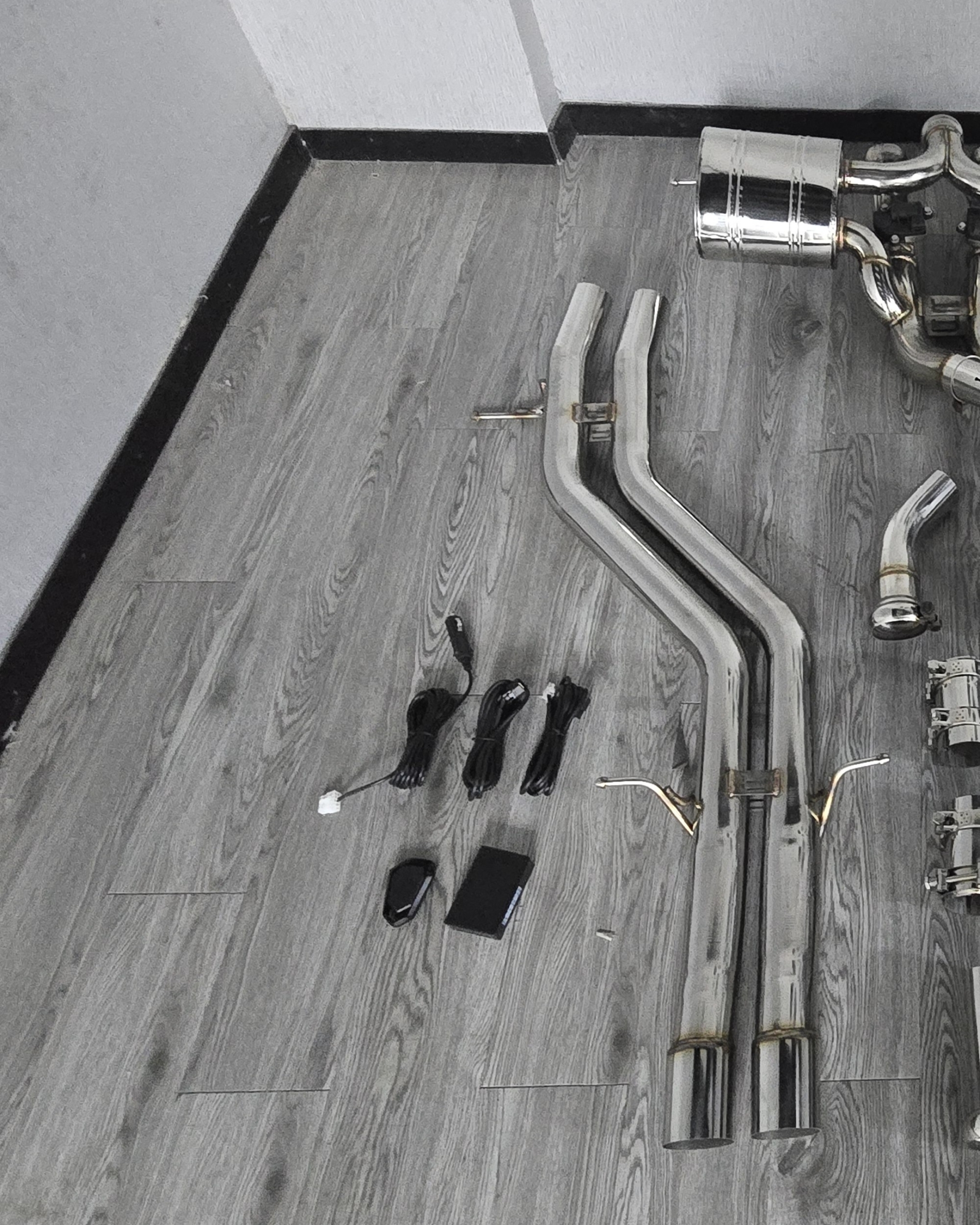
The exhaust hardware is documented separately because its inclusion and compatibility require written confirmation.
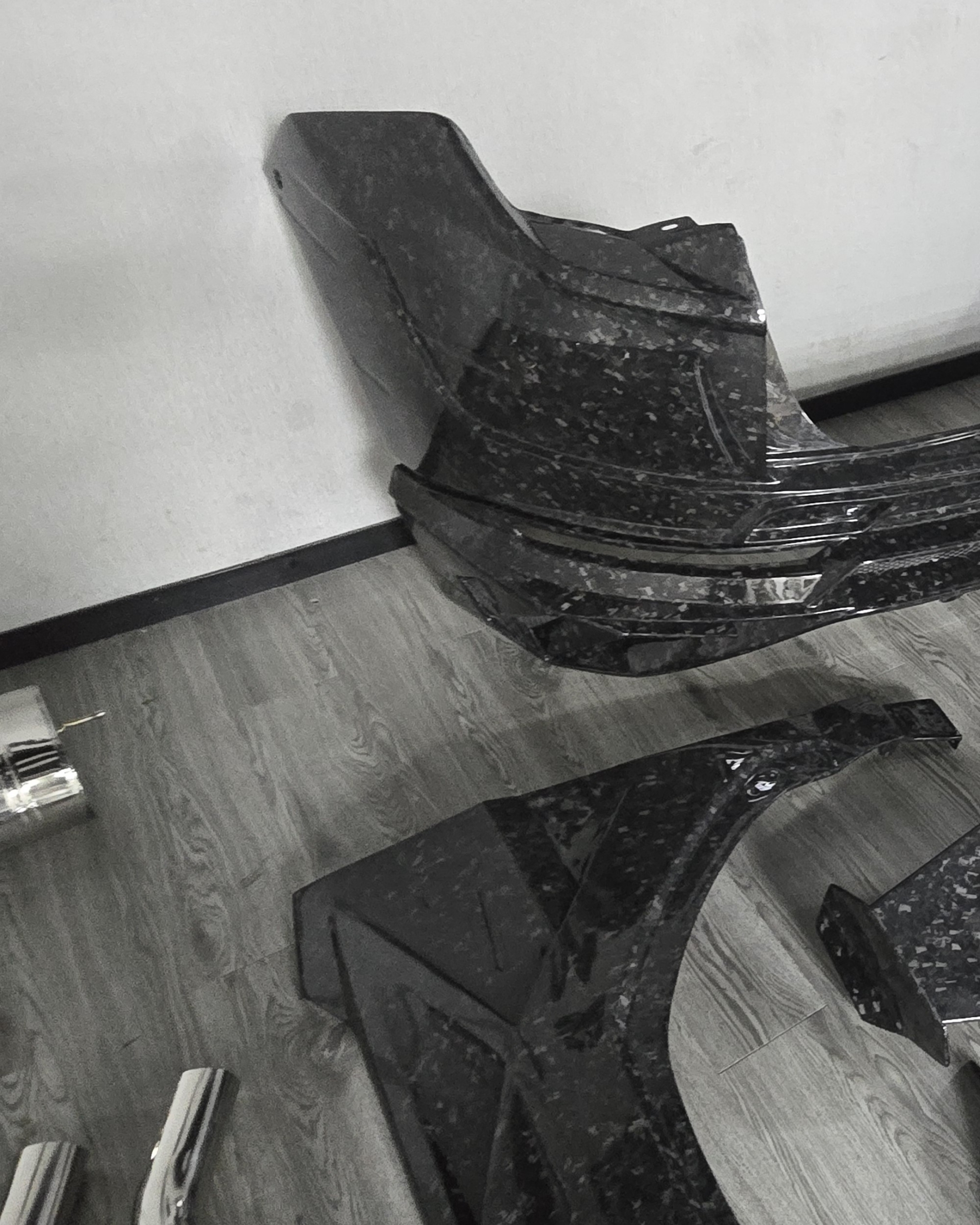
The final component view connects the upper spoiler direction with the broader rear conversion.
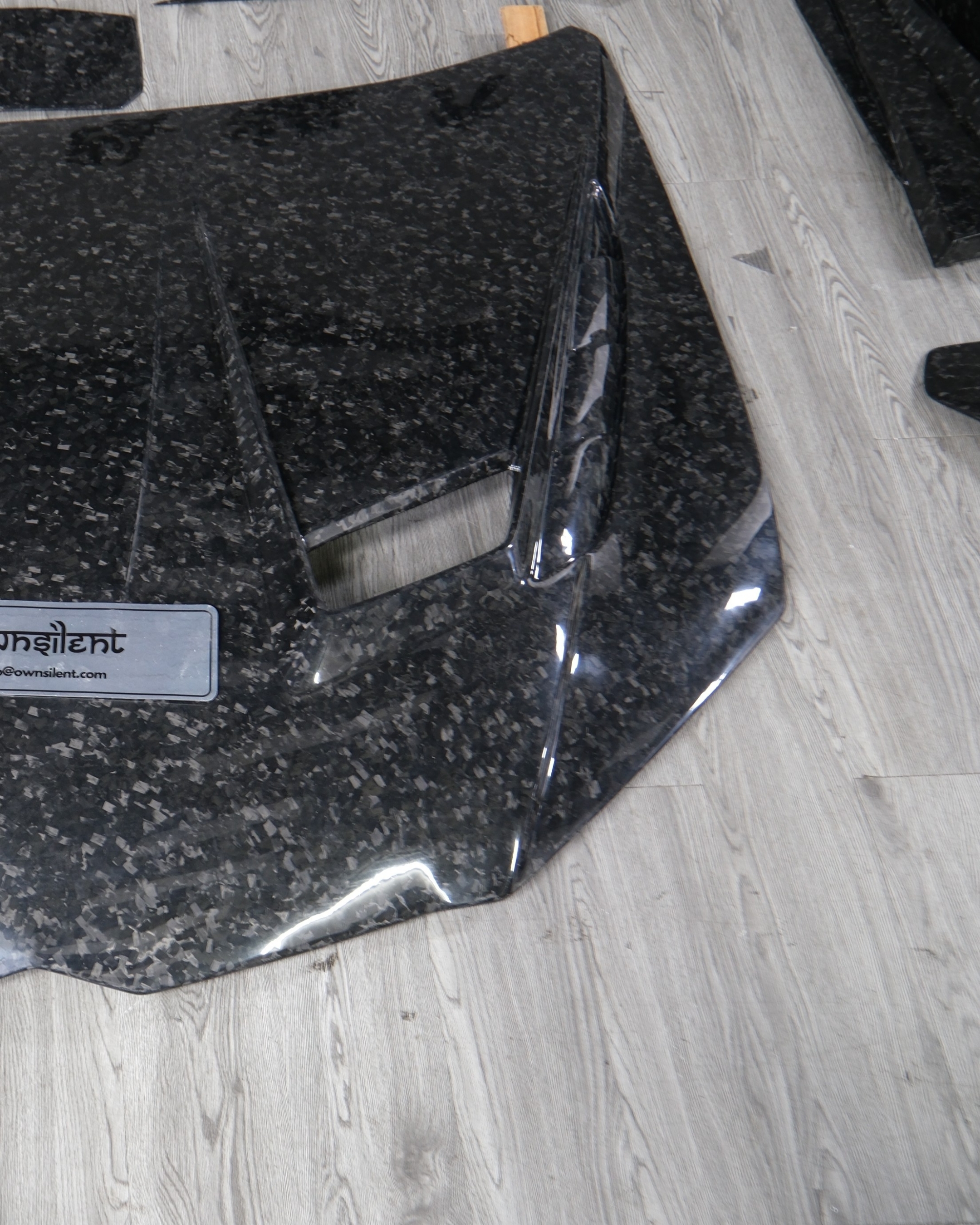
The vertical composition preserves the complete hood shape while showing the gloss carbon finish.
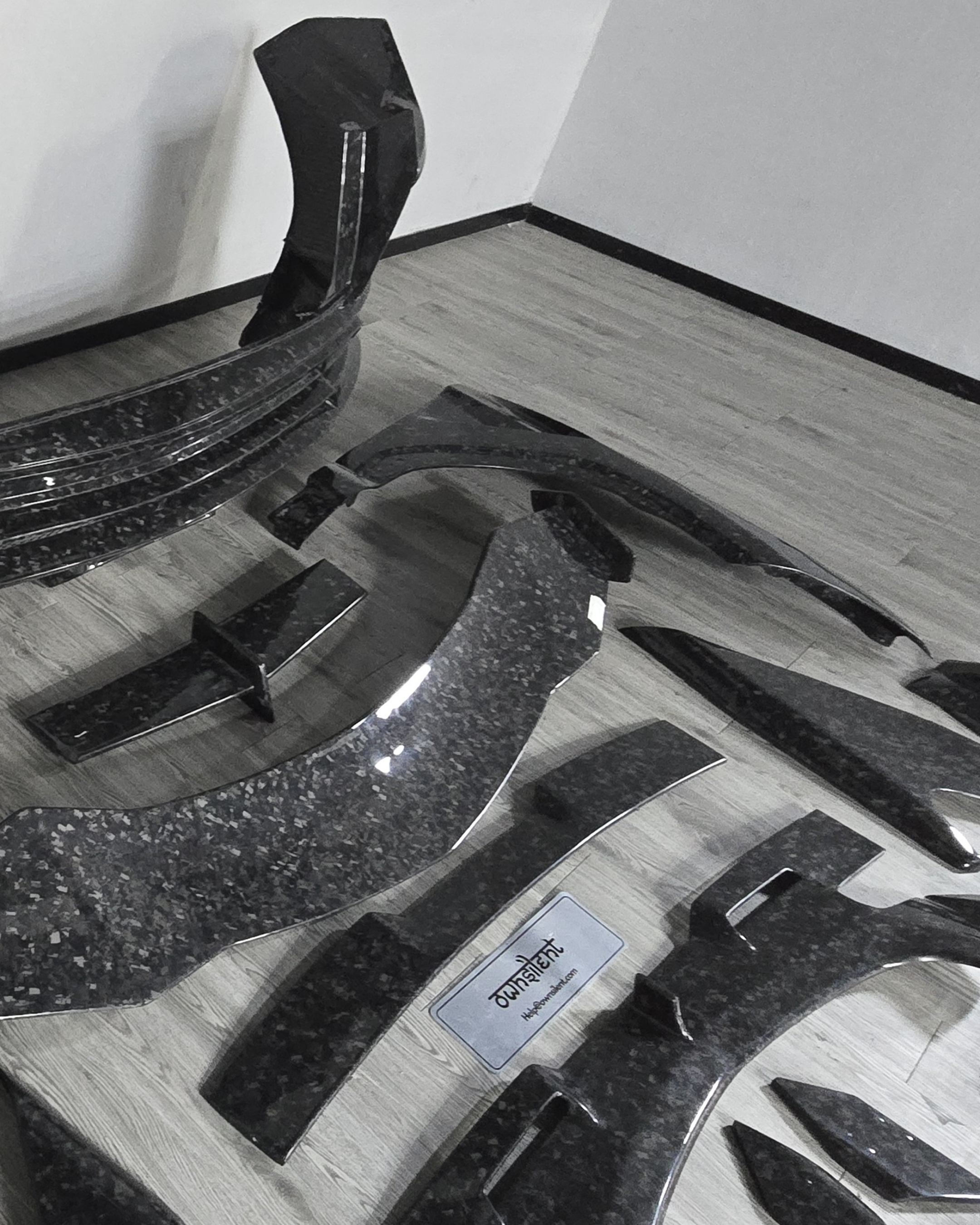
A closer crop isolates the contour and clear-coated forged-carbon surface.
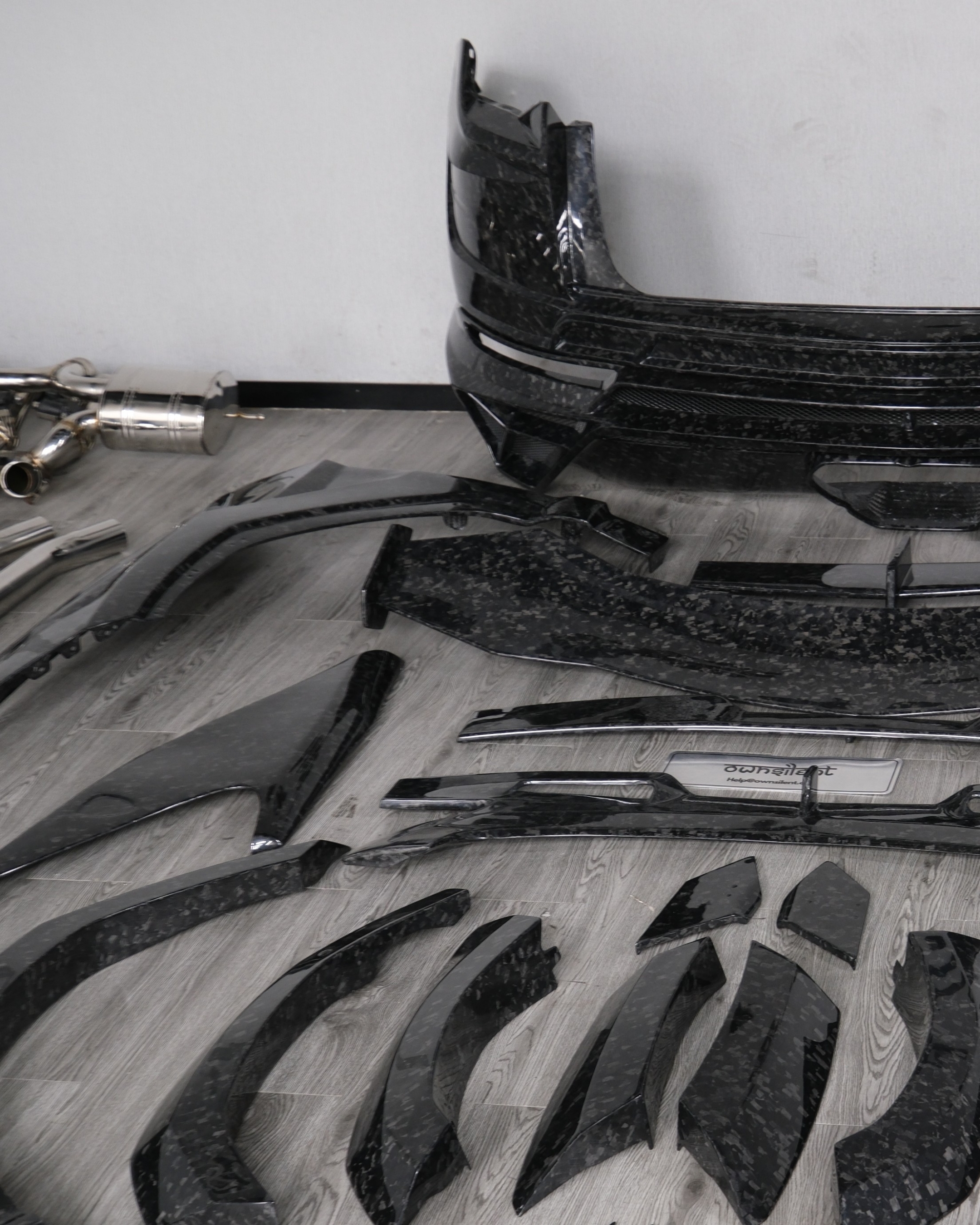
This smaller finishing component uses the same visible chopped-carbon pattern as the main exterior pieces.
Reflected light helps reveal surface consistency along the spoiler contour and edges.
Interior carbon programme
Dashboard trims, centre-console panels, steering-wheel details, door inserts, seat-shell accents and other made-to-order cabin components can be discussed separately to coordinate the forged-carbon finish inside the vehicle.
Material and finish specification
The random chopped-carbon finish has natural variation in pattern density and orientation.
The exact manufacturing process, reinforcement and substrate are stated in the written quotation.
The project set appears gloss finished. Satin, matte, tinted or another available finish requires separate written approval.
Visible edges, concealed returns, tabs, brackets and fastener locations affect both appearance and installation.
Large and small components should be reviewed together for compatible pattern, colour tone and clear-coat appearance.
Use non-abrasive cleaning products and inspect exposed edges or fixings following impact or workshop service.
Fitment and installation
Provide VIN, model year, Urus variant, market specification and current exterior condition.
Confirm bumper, hood, side, arch, rear and spoiler scope against the exact vehicle.
Align connected pieces and verify clearances before drilling, bonding, painting or final fastening.
Inspect sensors, lighting clearances, exhaust spacing, opening panels and all retained functions.
Custom-order workflow
Send VIN, year, variant, market and current exterior condition.
Choose the complete conversion or list the exact individual panels required.
Confirm forged-carbon direction, surface finish, included hardware, lead time and quotation.
Review the pre-dispatch inspection record and select protected air or sea freight to the destination.
Frequently asked questions
No. The components are presented before installation, so this page does not claim a completed-vehicle result.
Compatibility is confirmed from the exact model year, variant, market specification, VIN and vehicle condition.
Selected front, hood, side, arch, rear or spoiler components may be available. The quotation must list the exact individual scope.
Only components named in the final written quotation and packing list are included.
The page uses the product title and the visible forged-carbon appearance. Exact construction method and material specification must be written into the quotation.
Gloss is shown in the project set. Satin, matte or another available visual specification can be discussed and must be approved before production.
Yes. An experienced body and tuning workshop should inspect, trial-fit, align and install the complete package.
Exhaust sections are included only if separately named in the official quotation.
Lead time is confirmed after the component scope, vehicle specification and finish are approved.
Yes. Air and sea freight can be arranged after manufacturing, QC and protective packing. Destination requirements and optional insurance should be confirmed.
Explore related Lamborghini parts
Use the Urus model page to explore other compatible exterior, interior, wheel, braking and performance categories.
Get In Touch
Send the VIN, model year, Urus variant, destination, required components and preferred finish for a detailed fitment and quotation review.
Usually replies within one business day · Handled by the OWNSILENT team
Prefer email? Reach us at sales@ownsilent.international